Jesus is still a dangerous idea…

Stained glass at St John the Baptist's Anglica...
Image via Wikipedia

The Festival of Dangerous Ideas is on again at Sydney Opera House on October 2-3 covering everything from The Right is the New Left through to that most important of questions, Are All Men Fakes?

But before we take a closer a look at the festival (tomorrow), I recall discovering a dangerous idea when I was at university studying humanities back in the early eighties.

That was a time when Australia still had an active communist party and I think most of its members were either studying or lecturing in my course.

It might also explain why one of the subjects on offer was Studies in Rebellion and I was just rebellious enough to take it.

Then while most of my comrades where sliding to the left politically or dallying deeply into capitalism, I became a Christian and began volunteering in a soup kitchen.Read More »

Huge Chinese mattress hides $US1.4 trillion…

There is no political, social, educational or philosophical quick-fix for human nature. Figures showing the growing gap between the rich and poor in so-called communist China highlight this once again.

Despite decades of communist indoctrination and more recently, greater freedoms and openness to world markets, the Chinese people still like to keep money under their mattress so they can spend it on ‘things’.

And like anything in China, or India for that matter, that’s one big mattress.

A study conducted for Credit Suisse Group shows that China’s households hide as much as 9.3 trillion yuan ($US1.4 trillion) of income not reported in official figures – 80 per cent of it by the nation’s wealthiest.

One reason economists believe this figure is because the strongest area of economic demand in China right now is the domestic purchase of consumer items from designer handbags to flat screen televisions.

Taking the mattress cash figure into account, it turns out the average urban disposable household income is 32,154 yuan, or 90 per cent more than official figures. The bad news is that this means China’s rich-poor gap is most likely much bigger than realised.

The Gini coefficient is a single statistic used by economists to summarise the distribution of income across the population.Read More »

Chattering and tractoring classes worlds apart on election day

In the inner Sydney seat of Grandyler where I live we have as a choice of candidates, starting on the left:  two varieties of socialists, the Greens, a rare Democrat sighting, the sitting Labor member and a Liberal candidate who is so young that the picture of youths being sent off to war as canon-fodder comes to mind.

Compare this to, say, the rural NSW seat of Riverina and you have, starting at the right: One Nation,  Independent, Christian Democratic Party, Family First, Liberal Democrat, Nationals, Liberals, Labor and Greens although there may be some discussion as to the relative ‘rightness’ of some of these candidates.

In other words, we have remarkably different worlds just a few hundred kilometres apart. It’s a common divide between the city and the bush and grows wider with relative distance from major city CBDs.

While there are overlaps and exceptions, we would do well to understand and respect the differences in priority and perspective between the inner city ‘chattering classes’ and the rural ‘tractoring classes’. 

One lesson is that the Greens have taken a step up from being a minor party that falls into an organisational hole when elections drawn near. They are mobilised even in electorates where they have more chance of being mistaken for a vegetable than winning.

If parties such as the CDP or Family First aspire to real political influence they must find their support base, represent it powerfully and broadly and do the hard yards of political foot soldiering.

As for making sense of it all, an election article of mine has been published in Sight Magazine or visit my Australian Christian Voter blog to find a link and vote in an election day survey – what’s your tip for election day?

Relentless, restless reading confessions

People with blogs often tell other people, with or without blogs, about what they are reading. This may be to come across as a clever, readerish type or out of a genuine attempt to stimulate reading and discussion.

In my case I’m going to tell you what I’ve been reading because the litter of books next to my bed could be ignored no longer. I suddenly noticed it one day and thought, mmmm.

Anyway, here’s what I’m reading and feel free to use the comment facility with this post to inflict on me what you are reading. No, seriously, I’m generally interested! By the way, this reading does not include the portions of novels I am required to read for the publishing and editing courses I am doing which so far has included Truman Capote’s Breakfast at Tiffany’s, James Bradley’s The Resurrectionist and Brett Easton Ellis’ Lunar Park (and that’s just the first week…). And then there is the constant noting of books other people are recommending in my lectures so that I now have a list of about 37 books that simply must be read…

But back to the leaf-litter around my bed:

Read More »

Are we missing the very frontline of faith?

The Australian community is engaged in an extremely active and vigorous debate about the reality of God and I’m not sure the church at large is even aware it is going on.

While we faithful pray in our services and gatherings that God would move in our land, we may be missing the very answer to those prayers. (Try and stay with me my atheist readers, I know your blood pressure just rose at the mention of answered prayer.)

One of the first signs of spiritual revival might well be that people are even thinking about first order issues such as the origins and nature of life, is there supernatural or spiritual reality or only a material universe, and if religious claims are true how do we deal with many apparent contradictions and problems.

These kinds of questions are often and vigorously debated mainly in online forums and often in response to an increasing number of articles in the media addressing these questions from one perspective or another.

I can assure you this was not the case 10 or 20 years ago when most Australians didn’t want to discuss faith at all and where apathy and materialism (in this sense of material gain) seemed far more important.Read More »

Brush with advertising fame

B.W.A.F # 1: The new Pizza Hut ad where four delivery boys hop out of four identical Pizza Hut Morris Minis and walk into houses – filmed on Young St, Annandale a few blocks from home. Passed them making the ad while taking someone to the airport… No free pizza unfortunately.

B.W.A.F # 2: The Kit Kat ad with a guy impersonating an amp while people try out guitars in a guitar store – filmed in Billy Hyde pretty much next to our church, Eternity. They even ‘hired’ our car park while filming for the day. No free guitars and no free Kit Kats unfortunately.

I haven’t had a brush with Old Spice yet, but I’m working on it…

Utterance has no commercial blog for profit arrangements with these companies but all offers considered….

Audio/Photo Post: Art, death & everything on Kensington St

Kensington St Broadway is a handy shortcut if you are heading to Redfern or Cleveland St. Turns out it is more than a little interesting with food, art, education, death and development all delving into this Sydney back street.

Turn off Broadway with the shadow of the UTS tower on your back and walk steadfastly past curious artefacts and digging developers to come face to face with your mortality. Listen to my impromptu description:

This slideshow requires JavaScript.

Practical tips to avoid information overload

Futurist Alvin Toffler popularised the term ‘information overload’ in his book, Future Shock, written in 1970. He highlights the negative impact of vast amounts of information on making decisions: ‘When the individual is plunged into a fast and irregularly changing situation… his predictive accuracy plummets. He can no longer make the reasonably correct assessments on which rational behaviour is dependent.’

Read more at Suite101: Practical Tips to Avoid Information Overload.

Even men who think they’re Jesus respond to kindness

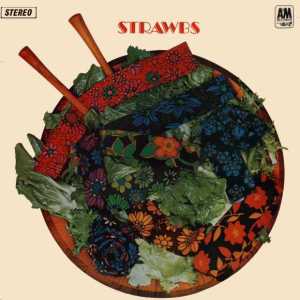
Came across this old song that first appeared on the Strawbs self-titled album in 1969 and was released as a single.

It reminds me of a few people I know and what I like most in the lyrics is the simple invitation of hospitality given to someone who is quite delusional. Kindness matters, even to Jesus.

Not sure about the pint of blood reference – maybe a beer too many. Oh, and the song was banned by the BBC… how times have changed.

The Man Who Called Himself Jesus
Dave Cousins

He came into the shop and looked me straight between the eyes
And said ‘You know I’m Jesus’, and I must have looked surprised
Because he said ‘Please don’t be hasty, no-one understands
But I’ve got a way to prove it’ and he lifted up his hands.

He was the man who called himself Jesus.

Read More »

Mother reminds world of Justin’s Christian origins

“No 15-year-old wants to be around his mother 24/7. And no mother wants to be around her 15-year-old 24/7, either.”

Sounds like a pretty down to earth comment really and the interesting thing is that it was made by Pattie Mallette, the mother of 16-year-old pop star, Justin Bieber.

Ms Mallette has been in the news this week for reminding the world of her son’s Christian origins. In a discussion about the star’s commitment to remain a virgin until marriage, his mother said, ‘He’s expressed his desire to stay pure, and honour women, and treat women with respect. So hopefully that stays valid.’

Apart from the slightly obscene aspect of the world discussing a 16-year-old’s virginity, it is an intersting insight into ridiculous fame crashing headlong into real people in real family.

Pattie Mallette was just 18 when she became pregnant with Justin, who was born on March 1, 1994, in Stratford, Ontario. She worked low paying office jobs as she raised Justin as a single mother.

While Justin taught himself  to play the piano, guitar and trumpet by the age of 12, Pattie began posting videos of his performances on YouTube with a clear strategy in mind.

It seems that she had a strong Christian faith and at some point, as many parents do, had in a very real way ‘given’ her son over into God’s hands, seeing him as a possible modern day prophet Samuel.Read More »

Gretel, Gillard and ‘god’ in an age of convenient Christianity

Gretel Killeen is now a columnist for The Sun-Herald and, I believe, we did the same communications degree too long ago to remember. Known to most as the host of Big Brother for many years, she is actually an acclaimed author in various genres and did time as a stand up comic.

She counts her most important achievement as being a single mother to her two children and apparently believes in a small ‘g’ god, whatever that means.

Gretel made a fairly intelligent contribution in Sunday’s column to the commentary on Prime Minister Julia Gillard’s declaration of non-faith:

‘And despite the fact I do believe in a god, I’d like to give praise… to Prime Minister Julia Gillard for declaring her atheism last week. In a hypocritical world, it’s not uncommon for allegedly God-fearing politicians to treat the Ten Commandments as though they were a smorgasbord rather than a set meal, choosing their own custom-made combinations to both impress others and serve themselves. It’s therefore thrilling in this age of convenient Christianity to hear someone tell the truth on an issue that could actually lose them votes.’

If she was seen wearing sackcloth and ash and saying some of those things, especially ‘Ten Commandments as… smorgasbord’ and ‘impress others and serve themselves’ we might easily mistake her for Joan the Baptist.

It is possible (and not mutually exclusive) to respect the honesty of a Prime Minister and the measure of faith of a newspaper columnist while still earnestly praying that they would both encounter the living Jesus. PH

Huey still loves Hughesy

Dave Hughes suggested on the 7pm Project tonight that most church attenders are hypocrites. The irony was he wasn’t angry with Christians, he was actually angry with Steve Price.

Another guest on the show ridiculed Christians for having an ‘imaginary friend’.

A third suggested that the Catholics she offended last week should forgive her, because that’s what Jesus would do.

Hughesy, no doubt there are plenty of hypocrites at church – there called sinners – and the church (and the 7pm Project) are full of them.

As for the ‘imaginary friend’, He has a great imagination – he even imagined (and spoke) us all into being.

And yes Jesus does forgive, and also encourages us to speak the truth in love.

And if you don’t know what this is all about, it’s Jesus on prime time – God is definitely back on the agenda in 21st century Australian.

Australians have long irreverently, but with some appreciation, referred to God as Huey. Send it down Huey! Our love and faith that is… PH

How will we create in 2020?

Ever wondered where the rapid spread and influence of technology, particularly in the area of digital communication, is taking us?

Author John Maeda has some interesting ideas of what our lives might look like in 2020. For him, digital technology will become more of an unconscious norm leaving us free to major on more nuanced, creative and physical realities.

‘We’ll witness a return to the integrity of craft, the humanity of authorship, and the rebalancing of our virtual and physical spaces. We’ll see a 21st-century renaissance in arts- and design-centered approaches to making things, where you-the individual-will take centre stage in culture and commerce.’

This may have implications for churches (and already is) where technology allows small, boutique churches to be heavily related to their own indigenous culture while powerfully connected in an organic way to global communities.

Read Maeda’s full article in the Sydney Morning Herald.

God dethroned, humanity is next

The ABC’s Q and A program last night gave a rare display of the logical outcome of secular humanism.

Having begun discussing the relative merits of saving whales verses chickens, the show ended, under the guidance of unethicist Peter Singer, considering that it might not be so bad for humans to have sexual relations with their pets.

While most people on the panel and in the audience couldn’t even engage with that outrageous final topic, it did show us where popular secular thinking is taking us.

Having dethroned God, the next logical step for secular atheism is to dethrone humanity. If there is no God to say that human life is sacred, made in His image, then people are just animals, right and wrong mean nothing and euthanising children and oral sex with dogs is acceptable.

If you don’t believe me, read the transcript. It happened on national television and while hugely offensive, was at least an honest viewing of the dismal trajectory of the thinking of Singer and the secularists.

If you have been flirting naively with some of their ideas, take a good look at the whole murky monster and flirt no more.

Utterance hits 6000, blogs top 110 million

Today Utterance ticked over 6001 hits, after my somewhat reckless New Year’s resolution to attempt to post every day.

Like most bloggers, once I got into the habit of regularly recording my thoughts for the benefit (or otherwise) of others, the issue becomes having too many things to say, and not enough time.

It’s interesting to consider that there are more than 110 million blogs in the world today but blogging only began in 1994, with one of the very first being  by Chicago-born Justin Hall, sometimes described as ‘the founding father of personal blogging.’ That’s some growth rate…

At the same time as blogging had its meteoric growth, the genre of creative non-fiction also increased rapidly in popularity and today is one of the most successful forms of literature.

Creative non-fiction is the presenting of substance in a literary style, or applying the technique of story to facts.

We all know instinctively that people love to tell and hear stories much more than be confronted with flat slabs of information. (How often have you found yourself re-telling a true-life illustration a preacher gave in a sermon, and not recalling much else?)

The idea is not new of course and the Gospel writers, if not inventing the genre, certainly perfected it as they told the factual story of Jesus’ life in a way that continues to compel, thousands of years later.

Would Jesus have blogged? Not likely, he gives his life and his Spirit, something much greater. But Matthew, Mark, Luke and John almost certainly would have been bloggers. Hopefully I do them justice. PH

PS. To celebrate 6000 + hits I’ve introduced a new theme for Utterance – quite a departure from the very neat and today theme I’ve been using. But then again, my life has got rather more loose ends than it had a few months ago, so it’s probably fitting!

Apple, Wikipedia push back porn

Apple CEO, Steve Job, fresh from launching the Ipad and Iphone 4, has apparently taken a stand to keep pornography out of applications for these devices.

In doing so he has been congratulated by many who support his aversion for porn, but he’s also raised the almost maniacal ire of the rampant ‘don’t you dare censor my internet use’ community, made up largely of pale men in their 30s and 40s.

‘…we do believe we have a moral responsibility to keep porn off the iPhone. Folks who want porn can buy an[d] Android phone,’ he is reported to have said in an email.

He defended his position when criticised by the Gawker blog, saying the Apple ‘revolution’ was about freedom, including ‘freedom from porn.’

At the same time, Jimmy Wales, Wikipedia’s founder, has come under fire after personally deleting ‘many’ images he deemed pornographic from the digital encyclopaedia.

Just when you were losing hope for humanity… PH

Ethic classes – ‘new atheism’ in poor disguise

As the debate rages over the trial of ethic classes as an alternative to Scripture in state schools, those in favour of the new program ask, in a smugly reasonable tone, ‘Why can’t the churches respect parents’ right to choose?’

As if that is all that is really at stake. As if this is really just about a choice between your child going to Scripture, ethics or having a half-hour break.

What it is really about, and why some churches are fighting so hard, is the final and complete secularisation of public schools, fueled by the rampant new atheism which views religion as poison.

No matter what politically correct sounding arguments emerge from both camps, at stake is the privilege of access to public schools.

The goal of the new ethic classes is to so threaten the status and viability of Scripture that it will eventually disappear.

Of course the Minister for Education will never say that, in public, nor the proponents of ethic classes. But you can hear it slipping through in an odd angry shot at the Anglicans or the Catholics during media debates, and it is rampant in the unofficial grassroots commentary.

My children attended a school that did not have Scripture, in which recognition of Easter and Christmas was completely secular. Christmas carols were out, ‘seasonal songs’ were in.

Parents of faith often felt under siege and so desolate was the atmosphere of the place, I eventually pleaded to be allowed to organise an assembly that in a light-hearted way, told the real Christmas story.  One half hour in an entire year…

So what is at stake is not so much the to and fro over Scripture and ethics. It is the choice between a completely secular atheistic system or one where there is some decent recognition that people of faith exist.

But we shouldn’t be surprised by these battles. The secularisation of society has been raging for many years and, in reality, the institutional power of the church (which gave it the right to Scripture classes) has long been in decay.

Christian commentators such as Joel Edwards of Micah Challenge have said that the church needs to accept the demise of institutional power, and take up the opportunity of grassroots influence.

Newer churches, such as the Pentecostals, have never had institutional power which is why they have been so much better at grassroots influence.

Maybe the way to win the current battle, is for Scripture and the Christian communities of inner city to be so vibrant, so alive, so full of grace and power, so full of kindness and generosity and love, so authentic in relationships across dividing lines, that instead of relying on ancient privilege, they benefit from a new invitation to participate in schools, organisations and communities… PH

Shroud evidence delights believers and sceptics in turn

The 2D Shroud image transformed by 3D computer graphics

Weeks after posting a story about new three-dimensional imaging of the Shroud of Turin, Utterance continues to field search inquiries about the Shroud from around the world.

Fascination with this enigmatic cloth apparently never ends and no doubt has been heightened with the Shroud’s first public display in 10 years having just ended at the Cathedral of St. John the Baptist in Turin.

Another factor is the quest for faith or unfaith as some seek in the Shroud evidence of Jesus’s reality while others continue the quest to disprove him.

While Christ’s reality does not hinge on the authenticity of the Shroud of Turin (there are many other historical evidences), it is still a powerful symbol of faith for millions of Christians and a ‘thorn in the flesh’ for secular atheists.

Two recent Shroud findings are split between supporters and detractors. 

Read More »

One brain for double the information – every 18 months

Some years ago I heard it said that there was more information in a Saturday newspaper than a person from the 17th century would experience in a life time.

Now this from Seth Godin

‘Redoubling to system failure

Every 18 months for the last decade, the world has doubled the data it pushes to you.

Twice as much email, twice as many friend requests, twice as many sites to check, twice as many devices.

When does your mind lose the ability to keep up? Then what happens? Is it already happening?’

Seth is a champion of the inter-connectivity of the internet and technology – if he’s worried, we should take note. PH

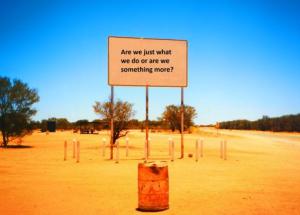
Are you what you do or something more?

I caught a glimpse of a new television commercial, I think for the Commonwealth Bank, featuring a man walking along a dusty road, whispering regrets to himself.

‘If only I would do something instead of just thinking about what I might do’ he says, or something like that.

Sounds like a carefully market-researched sentiment inserted into an emotive scene to echo what most people have thought at one point or another. Or continually.

Then the screen splits and a second, identical man is seen walking purposefully the opposite direction down a paved, tree and building lined road. The first man stops and stares after him.

The words ‘You are what you do’ fade on to the screen, along with the bank logo.

The implicit suggestion is that by associating with this bank, we will move from the ranks of the regretful thinkers to the have-it-all doers.

I don’t think so… If what we do is the sum of who we are, then we immediately dismiss those who can’t measure up – and ultimately that is all of us.

Read More »