Christian TV to disappear from free digital broadcast

At the same time as Sydney is looking forward to a new digital Christian radio service, it is losing on April 30 its popular digital television broadcast of the Australian Christian Channel (ACC).

ACC is screened free to air on digital channel 46 as part of trial broadcast of niche channels known as Digital Forty Four. Other channels to end on April 30 include National Indigenous Television, Expo home shopping channel, Teachers TV, Federal Parliament, a news, sport and weather headlines channel from the ABC and a digital program guide.

The scrapping of the free broadcast is the result of the Australian Communications and Media Authority’s decision not to extend the trial, which was conducted by Broadcast Australia.

‘We don’t believe the public interest is being well served with this decision,’ Graeme Barclay, Broadcast Australia Group CEO said. ‘We continue to passionately believe in the value to the industry and the community of niche programming being available on a free to air basis.’

The Australian Christian Channel has been a part of the trial that began in 2004 and reports it has seen a growing, supportive audience who value the service. ACC will now only be available to people with Pay TV such as Foxtel, Austar, Optus TV, TransACT and Neighbourhood Cable.

If you would like to lobby for the re-introduction of the ACC and other niche broadcasters on free to air digital television, write to the Minister for Broadband, Communications and the Digital Economy, Stephen Conroy:
email – minister@dbcde.gov.au ; postal address – Hon. Stephen Conroy, Level 4, 4 Treasury Place, Melbourne Vic, 3002. PH

Influence the future of Christian radio

Back in the bad old days of Christian radio in Sydney, you were more likely to hear a polka than a Christian song on Sydney’s only Christian radio station, then known as 2CBA-FM.

The station, now known as Hope 103.2, has come along a way in the past five years and has a strong ‘listenership’ – Christian and otherwise.

Still, a city the size of Sydney might well have deserved a second Christian station but tough competition for radio licences had restricted the number of stations to one – until now.

With the launch of digital radio in Australia, Hope 103.2 has the chance to create a second Sydney Christian radio station for the first time.

The station is offering supporters the opportunity to ‘be a vital part of creating this history making event’  by responding to an online survey and ‘letting us know the kind of music and teaching programs you would like to hear’.

So if you are opposed to the return of polka, or have other constructive suggestions, visit the survey now. PH

Unforgiveness allows wrongdoer to rent a room in our head

If anyone in Australia has learned something about the giving and receiving of forgiveness, it is Lindy Chamberlain-Creighton.

Lindy was convicted in 1982 of killing her baby daughter Azariah while camping at Uluru in 1980 before being finally exonerated six years later. In that time, Lindy was judged wrongly not only by many in the police and court system, but by at least half of our nation, which was divided over the subject of her guilt or innocence.

Yesterday, Lindy, along with her second husband, Rick Creighton, was a guest speaker at St Ives Baptist Church as part of that church’s innovative Spirited Australians program. Forgiveness was a key theme.

Her visit attracted media attention, partly because Lindy Chamberlain will always be, to some degree, public property in Australia and partly because of revelations made during the talk.

Rick Creighton spoke of a young woman who was so convinced that Lindy had killed her baby, and so outraged, that she got herself convicted of a minor offence to get into the same Northern Territory jail where Lindy was serving a sentence for murder.Read More »

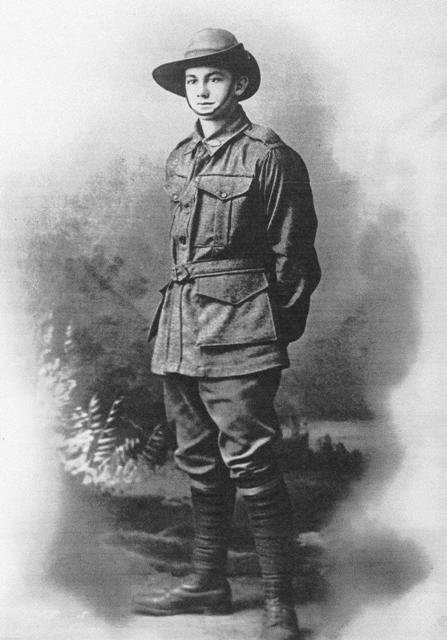
We found you Roy, 91 years later…

Roy Frederick Hallett

When I first saw the name R. F. Hallett carved in the stone of the Australian War Memorial, Villers-Bretonneax, France, in 2009, it was if it shouted out to me, ‘Hey, here I am, where have you been?’

I felt like Roy Frederick was waiting impatiently for someone to come find him, his body never recovered from the killing fields on which the memorial came to be built.

Under the warm sun and surrounded by the peaceful green fields of rural France, my wife and I had made our way from Paris to Amiens and then on to Villers Bretonneax as an act of remembrance for my father’s uncle who never returned from World War 1.

Ironically, Roy went to war with a bullet scar already showing on his foot, perhaps the result of an accident while hunting or working as a stockman.

Or maybe he belonged to gun club, as did many of those recruited around the same time, into the 36th battalion.  Ambrose Carmichael, Minister for Public Information led a recruitment drive from the rifle clubs of NSW in early 1916. The battalion became known as ‘Carmichael’s Thousand’. Carmichael led by example and enlisted as well, serving in the battalion as a captain.

Whatever the source of his bullet scar, he was to see much, much worse in his short but bloody tour of duty along the battlefields of Europe.

While Roy never returned, his scant belongings did and among them were two religious books. Our family history is not particularly religious but it sounds as if Roy may have found some solace in faith in the face of death.

The rest of his story, as gleaned from Australian war records, follows and is my contribution to Anzac Day… Lest we forget.

Read More »

Escaping the ‘once I have time’ fairytale

I read somewhere recently that for modern people, saying you’ll do something ‘once I have time’ is as much a fairytale as saying ‘once upon a time’.

The reality is that if we wait for ‘enough’ time to do that heartfelt, significant, deeply true thing, we’ll never do it. It will remain a fairytale of our existence, but not a true story.

Perhaps part of the problem is we are always busy pursuing our own unscrutinised opinion of what is important, or preparing endlessly for that great opportunity around the corner, or worrying what others might think, or even worse for us, worrying that they may not notice at all.

‘Readiness means a right relationship to God and a knowledge of where we are at present,’ says Oswald Chambers. ‘A ready person never needs to get ready.’ If we are trying to act without God’s reality in our life, not only will we struggle for time, we’ll struggle for identity, clarity and honesty.

Another problem is that we complicate action, losing sight of the simplicity of ‘obedience’. More wisdom from Oswald Chambers: ‘Our Lord must be repeatedly astounded at us – astounded at how unsimple we are. It is opinions of our own which make us stupid; when we are simple we are never stupid, we discern all the time.’

Oswald Chambers quotes taken from My Utmost for His Highest, April 18,21.

Lady goes ga ga over ‘Jesus’ Grace

When Lady Ga Ga sought a way to heap praise on her musical inspiration, Grace Jones, she said the 80’s singer and model was like her ‘Jesus’.

This might indicate that beneath the provocative (euphemism) performances and costumes, Lady Ga Ga is still within reach of her Catholic upbringing, even if unconsciously. Lady Ga Ga (Stefani Joanne Angelina) was educated at New York’s Sacred Heart school.

Once again, Jesus finds his way into the most unlikely of places.

As for Grace Jones, apart from the fact that Jesus has everything to do with grace, it is unclear as to what other similarities can be drawn.

In any case, Jones wants nothing to do with Ga Ga and turned down an offer to perform with her. ‘I’d just prefer to work with someone who is more original and someone who is not copying me, actually,’ the 61-year-old said.

She was not heard to comment that no one has been able to copy Jesus, because he is ‘the only Begotten’ and worthy of our worship. 

Lady Ga Ga’s last brush with Jesus was when she wore her hair in a kind of Son of God halo effect with a skimpy blood-red outfit and was widely reported by celebrity magazines as ‘looking like Jesus’. I think not… PH

Religion of hate loses touch with God of love

‘Many women who do not dress modestly … lead young men astray, corrupt their chastity and spread adultery in society, which (consequently) increases earthquakes.’ – Senior Iranian cleric,  Hojatoleslam Kazem Sedighi, as quoted by Iranian media. 

‘Thank God for eight more dead troops. We are praying for 8,000 more. We’ve turned America over to the fags; they’re coming home in body bags.’ April 16, 2010 Press Release from Pastor Fred Phelp’s Westboro Baptist Church, Kansas, US. 

If Mr Sedighi and Mr Phelps met in the street they would no doubt be mortal enemies, except they are speaking from the same script. One believes God is sending earthquakes to Iran due to short dresses and the other believes God is sending home dead soldiers because of the US tolerance of homosexuality. 

While these two ‘clerics’ might seem to be at opposite ends of the religious spectrum (Muslim v Christian) they are actually of the same religious spirit, just wearing different colours. 

Religion is a set of laws that people observe externally with scant regard for the state of their heart, or other’s. Power is gained by asserting these laws in ever-increasing measure to affirm one’s own superiority and to ensure the others sublimation. 

It is true that we live in a moral universe and that there is a way of living that is right before God. But none of us attain it and our only hope is not more religion, but a freeing relationship with the one who is always truth, and love.When the religious power-mongers of Jesus’ day brought an adulterous woman before him, he first reminded them of their own sin and then dealt graciously with the woman. ‘He that is without sin, throw the first stone.’ No stones were thrown and the only one entitled too, Jesus, chose to love, forgive and gently direct the woman to a better life – one that she found in following him. 

Now if Jesus didn’t cast a stone, how is that Mr Sedighi and Mr Phelps (and, let’s be honest, occasionally you and I)think they can? Because they have lost sight (or never known) their own brokenness before God and that in Jesus, judgement has fallen, been met, and the way thrown open for new life. Does God hate sin? Yes, because of what it does to people. Does God hate people? No, he died for them. All of us. 

A certain Australian pastor, who I’ll refrain from naming at this point, made some frighteningly similar remarks to these vengeful clerics in the context of the Victorian bushfires last year. It is to be hoped that he submits his theology to the crucible of his peers before making any more remarks like that… PH

Faith can be born in, and survive, a shipwreck

With critics claiming the Pope’s reputation has been shipwrecked by his inaction over the clerical abuse of children, His Holiness visited Malta last weekend to commemorate the 1950th anniversary of the Apostle Paul’s shipwreck near the island, an event recorded in the book of Acts.

Interestingly, the two issues came together on Malta when the Pope met with eight Maltese men, victims of sexual abuse by Catholic priests.

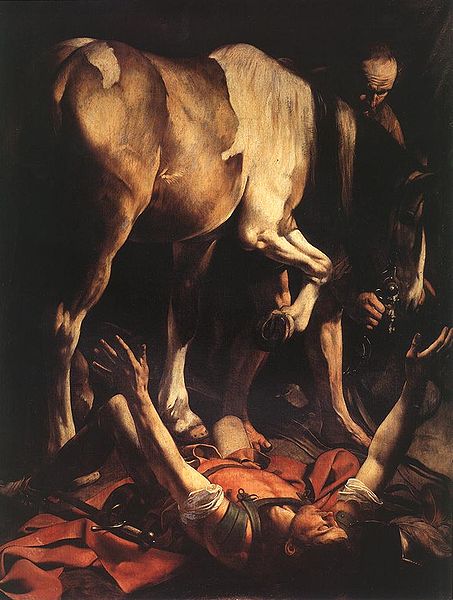
Conversion of Paul as depicted Caravaggio

The Sydney Morning Herald reports that Pope Benedict promised them with tears in his eyes that the Catholic Church would seek justice for paedophile priests and implement ‘effective measures’ to protect young people from abuse.

Benedict expressed his ‘shame and sorrow’ at the pain the men and their families suffered and prayed with them during the meeting at the Vatican’s embassy in Malta.
One of the men described the meeting as ‘fantastic’. ‘Everyone was crying,’ he said. It is the first time Benedict has met with abuse victims since the worldwide clerical abuse scandal engulfed the Vatican earlier this year.

While this meeting had not been foreshadowed by the Pope, he gave three other powerfully relevant reasons for his visit to Malta.

Read More »

Farm in a bag brings food to the slums

The greatest population  movement in human history is underway as people on all continents leave rural areas and flood into ever-larger cities.
Africa is no exception and one community organisation has devised a way to bring the farm to the city, even the crowded slums of Nairobi, Kenya.

Life is hard in Nairobi’s densely populated slums but thanks to the innovative farm-in-a-sack project, some residents at least are able to return to their agricultural roots.

Poor families in the Mathare slum are given more than 40 seedlings which can be grown into food in just a few weeks. And even though the streets are narrow and garbage is strewn everywhere, mini-farms are cropping up on spare land.

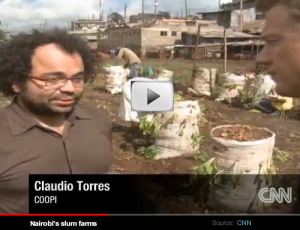
The project was started by the Italian organisation Cooperazione Internazionale  (COOPI), which brought in rural agriculturists to teach community groups how to create vegetable farms in the slums.

COOPI provided each participating household with one sack containing soil mix and 43 seedlings to cultivate: 25 spinach, 15 kale, 2 capsicum and 1 spring onion. 

The vegetables can be harvested many times for at least one year. Capsicum and spring onions provide passive pest control instead of chemicals while the spinach is a rapid growing source of nutrition – sometimes even growing out of the side of the sack before being properly planted.

Claudio Torres, from COOPI, said of the project: ‘There are two effects. First people really have more food,  nutrition and micronutrients. But also, this brings together the community.’

Earlier this year, it was inspiring to meet in Sydney Pastor Evans Mage from Nairobi who is planting churches through the slums. How amazing it would be to join his spiritual planting with this natural planting, to truly change lives. PH (Source: CNN)

‘Skippy’ and Silvie feature at city prayer breakfast

Up to 500 people will pray ‘mercy and blessing’ on the city at the inaugural Sydney Prayer Breakfast to be held at the Shangri-La Hotel on June 4.

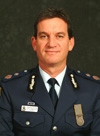
Organised by Sydney Prayer Breakfast Limited, a group linked to the City Bible Forum, guest speakers at the breakfast include NSW Commissioner of Police, Andrew ‘Skippy’ Scipione, and entertainer, Silvie Paladino.

Commissioner Scipione has had extensive experience in  law enforcement, and after stints with the Australian Customs Service, National Crime Authority and various positions with the NSW Police Force he was appointed Commissioner of Police last year. Away from his official duties he enjoys surfing, camping and spending time with his family.  

Silvie Paladino has established herself as one of Australia’s most versatile and talented entertainers performing throughout Australia, Asia and London’s West End. She has performed in Les Miserables, Cats, Miss Saigon, Hair, Mamma Mia! and Sideshow Alley. She is also a regular at Melbourne’s carols by Candlelight.

Organisers encourage any Christian who desires to pray for the different communities that come together in the Sydney CBD, such as business, politics, the arts and those in need, to attend the breakfast.’We believe that you will be greatly encouraged in your faith by participating in the breakfast. It’s good to pray at all times and also alone, but there is a place for corporate prayer on occasions such as this.’The Sydney Morning Herald  reported on the breakfast under the heading, Top cop leads God squad.’He’s the state’s top cop, a cleanskin crime-fighter who loves God and hates vice. But the Police Commissioner, Andrew Scipione, doesn’t just want to save the people of Sydney from crooks. He is worried about our eternal souls as well.’Sydney Prayer Breakfast tickets are $50 a head and for more information call 02 9232 8700, email or visit Sydney Prayer Breakfast . PH

Writers’ festival ‘undefends’ God…

Read, Rethink, Respond... catch-line for Sydney Writers' Festival

At first glance, Christians might be gratified to learn that the Sydney Writers’ Festival in May will feature a session called, In Defence of God. Closer examination though suggests a name change is in order – God Thrown to the Lions… Media reports say festival director, Chip Rolley, felt that ‘God deserved some time’ after recent visits to Australia by high-profile atheists such as Richard Dawkins and Christopher Hitchens.

Good one Chip, are you having a joke with us? The session will be chaired by atheist and publisher-in-chief at Melbourne University Press, Louise Adler, and the two speakers are Eric Lax, a lapsed Episcopalian, now described as a ‘hopeful unbeliever’; and Reza Aslan, an acclaimed Muslim scholar and writer. Reza’s surname is the only (accidental) positive reference to Christianity (think CS Lewis). 

The plot (pun intended) thickens when it is realised the session will be held on Sunday 10am (May 23). Now, where would most Christians usually be at 10am on a Sunday?

Read More »

Finding faith in a crazy world

Pope arrest plans, church championing hate, trusting God safe again and league star driven to thanks… A God’s-eye overview of some of the madness, mayhem and moments of clarity involving issues of faith in our world currently.

Read More »

On getting off drink and closer to God

Walking away from the small community centre, past the sitting smokers, down the path in the warm sunshine, he stops and calls me Pete.

‘Pete, there are a lot of people on the streets who could get up if they wanted to but they don’t want to.’

I nod in agreement, ‘None of us make any changes in our life unless we really want to, so I guess that applies to people on the street too.’

‘I was homeless you know Pete,’ he says. ‘But I got myself up. Drugs are the real problem. Drugs and alcohol. I’ve never used drugs but alcohol was my problem.

‘But after I did 15 years straight of a 20 year sentence, the last thing the parole officer said to me was, “Are you going to give up drinking?” and I said, “Yes.”‘

And I haven’t drunk for 34 years.

‘That’s an inspirational story, you’re a great example,’ I say.

He chuckles, and fixes his ebony eyes on me and I feel privileged that this elderly man who carries a remarkable sense of wisdom and dignity, chooses to tell me his stories, week after week.

‘There was one time when I was drinking that I got picked up on the street by three policemen and put into a police van with three deros. When we pulled up at the station we all got out of the van and the police each took one of the deros into the police station and I walked straight across the road and into the Oxford Hotel,’ he says with a chuckle.

He talks about people in prison who ‘became’ Christians to get out of the big house. ‘I’m not a Christian, never will be, but I wouldn’t do that, just put it on.’

He recalled the advice of his mother. ‘She told me that God keeps way off in the distance and always has his eye on us. He’ll get them…’

Might not be great theology but I can feel the faith in this man, I can feel that he has a closeness to God that is born of respect, honour and honesty. One day I might just get to help him see it. I am encouraged. PH

Are new ethics classes ethical?

‘Sounds like a serious ethical issue has arisen even before the first class is taught,’ Australian Christian Lobby managing director, Jim Wallace, says of the introduction of ethic classes in NSW schools.

Writing in the Sydney Morning Herald, Wallace continues ‘…with the pilot trial due to start next term in 10 public primary schools, it has emerged they are being pitched with the obvious aim to draw students away from Scripture classes, despite the Government’s assurances they would not.’

I posted the following comment on the SMH site in support of the article:

Jim raises important questions that the NSW Government needs to answer. If the ethics course is so important, why not make it available to all students to complement Scripture? If this course is being funded and taught by professional teachers, then should Scripture be given similar assistance? How can you teach ethics and leave Christianity out? It is the ethical base of our laws and institutions and, more importantly, of a huge number of Australian families (not just church goers). Scripture teaches ethics that are beneficial and applicable regardless of religious belief. Ethics classes should be just as balanced.

Last time I looked there were about 150 comments with a good representation of views. Maybe you would like to join the discussion? PH

My hair like Jesus wore it, hallelujah I adore it

God-spotting, yeah man.

I’ll admit I’ve never seen Hair, the musical. Too young for the sixties, too old for the remakes. So I’ve never come across these lyrics from the musical:

My hair like Jesus wore it,
Hallelujah, I adore it…
Hair, hair, hair, hair…
As God can grow it, my hair 

I do know that you wouldn’t usually describe Hair as a musical encouraging  belief in God so it is nice, all these years later, to notice that He made an appearance and did receive credit for growing hair. As I recall, His Son also said that he even knows the ever-changing numbers of hairs on our heads. A sign of His care for us.

This all started when I saw ‘my hair like Jesus wore it…’ as a link and heading to an article on body image in various newspapers. Oh, and it was spotting Jesus in such a context that got my attention, not the body image topic, as important as that is…

Anyway, I’ll quit while I’m ahead (or, more correctly, while I still have a head of hair…) PH

One year on, a fresh look for Utterance

I wrote the first blog post of my life on April 27, 2009, nearly a year ago, but it wasn’t until a hastily conceived New Year’s Resolution that I got serious about blogging (nearly) every day.

Utterance’s first thousand hits took about 10 months and the next two thousand just two months – I still marvel at those sites that have millions of hits in a day!

I’ve had some amazing feedback in that time, learned a great deal and rediscovered the joy of writing (if not, perhaps, the skill). I have even at times felt like a journalist breaking news – it’s hard to get the printer’s ink out of your blood (sorry, old journo saying…)

The full version of the Utterance header photo

To celebrate a year of Utterance, and to reflect the change of seasons, I’ve employed one of WordPress‘ favourite themes, Misty Look. The photo in the header was taken by myself at Hawkeshead in the Lake District, England. It shows a gate, a tombstone and a rather shiny clock on the old cathedral. Quite symbolic I think, but I’ll leave you to consider the conjunction of these elements. Happy reading and don’t forget to breath – speak – and breath again…PH


Can we save Letters to God?

A few weeks ago we highlighted the US cinema release of To Save  a Life on the basis that it contains realistic portrayals of Christians and might prove to be an encouraging film for Christians and thought-provoking for others.

Despite its clear Christian production values, the film only grossed $4 million in the land of the mega church, Moral Majority and Christian right.

Apparently it is one thing to demand more of Jesus in popular culture and another thing to actually vote with your ‘seat’. As a reuslt of its poor earning in America, we may not even see it in cinemas in Australia.

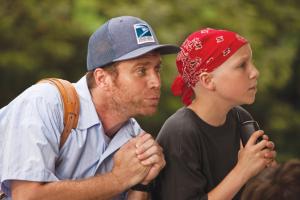
Postal worker Brady with cancer patient Tyler in Letters to God

Now Letters to God is out and again producers must be nervouslty waiting to see if they will earn their money back. 

Letters to God – a film directed by one of the producers of Fireproof –  is a family drama about Tyler, a young boy who literally writes, and mails, letters to God. In the letters, Tyler speaks to God as a close friend in a way that recognises that he may meet his Maker before too long. Tyler has cancer.

Read More »

Wellbeing snapshot shows huge divide

Imagine you were asked to rate your current life between zero and 10 and your life in five years time? As you chose a number to describe your sense of wellbeing now and prospects for the future, would you be thinking of how you are feeling today (not enough sleep last night… stressful meeting at work today…) or rather the underlying factors (good health, housing, employment, stable government, personal freedom). How might your faith affect your view?

Social researchers at Gallup have collated a global snapshot of wellbeing using data collected in 155 countries or areas since 2005. Gallup classifies respondents as ‘thriving,’ ‘struggling,’ or ‘suffering,’ according to how they rate their lives based on the Cantril Self-Anchoring Striving Scale:

Please imagine a ladder with steps numbered from zero at the bottom to 10 at the top. The top of the ladder represents the best possible life for you and the bottom of the ladder represents the worst possible life for you. On which step of the ladder would you say you personally feel you stand at this time? (ladder-present) On which step do you think you will stand about five years from now? (ladder-future)

According to separate research, people tend to answer these questions from the perspective of life evaluation (judgements of life) rather than daily affect (feelings). It is called a self-anchoring scale because it allows people to interpret their wellbeing from their own perspective rather than external measures such as how much money they earn, levels of education or political conditions.

In other words, if the research is to be believed, people across the globe are saying, ‘this is how I feel about my life’ not on the basis of  ‘I have a headache today’ but on the basis of ‘I feel my life looks like this’. A poor person in Africa might actually feel very happy in the midst of their poverty but when stepping back and assessing their prospects, they realise they are up against it and so report low ladder scores. A rich person in Denmark might be feeling gloomy in the midst of their wealth but when stepping back to view their life, realise they have plenty to feel confident about.

So what were the results of Gallup’s global wellbeing research? It reveals a vast divide that underscores the diversity of economic development challenges around the world.

Read More »

Christian Obama urges commitment to Micah’s challenge

Unprecedented coverage of the religious views of Prime Minister Kevin Rudd and more recently Opposition Leader Tony Abbott has shifted today to focus on possibly the world’s greatest religious enigma, US President Barak Obama.

President Obama hosted an Easter Prayer Breakfast yesterday (April 6) with 90 guests including leaders from most major denominations, the National Council of Churches, leaders of small and large churches and well-known Christian identities such as Bill Hybels and Joel and Victoria Osteen.

In America, where the appearance of Christian faith is almost obligatory for politicians, President Obama has been somewhat reticent to be seen as too firmly placed in that ‘corner’ and has not joined a church since moving to Washington.

As he welcomed people to the breakfast, he noted that the White House had also held a Seder to mark the Jewish Passover and an Iftar with Muslim Americans during Ramadan.

However, in his eight minute speech at the breakfast, President Obama clearly identified himself as a Christian, ‘Today, I’m particularly blessed to welcome you, my brothers and sisters in Christ, for this Easter breakfast.’

Later, reflecting on what Easter meant to him, Obama said, ‘…as Christians, we believe the redemption can be delivered – by faith in Jesus Christ… And the possibility that redemption can make straight the crookedness of a character, make whole the incompleteness of a soul. Redemption makes life, however fleeting here on Earth, resound with eternal hope.’

Recalling the words of the prophet Micah – championed by Micah Challenge,the social justice arm of evangelical Christians – Obama encouraged those present to commit their spirit ‘to the pursuit of a life that is true, to act justly and to love mercy and walk humbly with the Lord.’

Read More »