‘She was the most wonderful woman that I ever come across’ – farewell Margaret Somerville

Many people have treasured memories of Australian missionary Margaret Somerville, none more so than the Aboriginal children she guided across the continent to safety during World War 2.

Connie Cole, one of the last survivors of this epic journey, said of Margaret:

‘She was the most wonderful woman that I ever come across.’

Margaret died last week aged 101 at a nursing home on the Central Coast.

A Memorial Service for her will be held at Rockdale Uniting Church on Friday, August 8 at 2pm.

My memories of Margaret go back to the early 1980s when I was a journalism student at the Institute of Technolgy (now UTS ) and we both attended Newtown Mission.

She seemed old to me then but in a sprightly, energetic way. Then again I was still in my teens so most people seemed old.

In preparing a radio documentary on the history of Christian mission among Aboriginal people, I interviewed Margaret at her home about her experiences. Her remarkable journey with a group of young Aboriginal children clear across the continent was, it seemed, just a small part of a long life of caring for others.

She understood that missionary endeavour among first Australians was criticised by many at the time but I remember, even in those early days of land rights protests, she was a compelling defender of Christian mission.

To see why, watch this trailer for Croaker Island Exodus:

Read more about Margaret Somerville’s life and legacy here

100 years on, enlisting for World War 1: the army medical

100 years, World War One, WW1, enlistment, Aboriginal diggers,
Roy Frederick Hallett

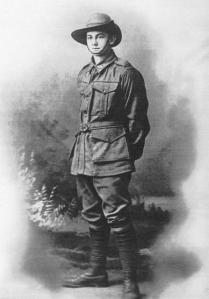
To commemorate 100 years today since the start of World War 1, here’s a section from my unpublished novel Shot: a great war story.

This section is based on the actual enlistment records of my great uncle, Roy Frederick Hallett, including the date and the recorded outcome of his medical. For a man who died nearly a hundred years ago, it is amazing how much can be gleaned of his existence from the service records contained in Australia’s national archives.

Of course, there is an imaginative element as well, the main one being that in my story, Roy is accompanied by an Aboriginal friend who was also seeking to enlist and together they needed to rely on some trickery for this to occur. Aboriginals were not allowed to enlist or leave Australia without Federal Government permission and so were often knocked back early in the war. But as the war outlasted most expectations, and with casualties mounting, it seemed to become easier for Indigenous men to join their white compatriots in the army.

A famous example of this is Douglas Grant on which I have based some of my character’s experiences, as a way of honouring his remarkable contribution.

During this commemorative year, Roy’s name will be projected onto the exterior of the Hall of Memory on:

  • Sat 30 August, 2014 at 1:52 am
  • Wed 15 October, 2014 at 11:40 pm
  • Mon 8 December, 2014 at 8:59 pm
  • Mon 2 February, 2015 at 12:22 am
  • Tue 24 March, 2015 at 10:58 pm
  • Wed 6 May, 2015 at 11:32 pm
  • Tue 16 June, 2015 at 1:18 am
  • Thu 23 July, 2015 at 6:15 pm

Please enjoy this imaginative reflection on what it might have been like to come in from the outback to join the army.

Roy and Yirra, Singleton, October 25, 1916

‘I know ye father and mother, and I know ye brothers and sisters, and with a wee bit of imagination, I may even recognise you in there somewhere Roy, but ne’er in me life have I met this fella ye be calling Arnold.’

Roy smiled as he stood across the counter from the local Singleton recruitment officer, Corporal Jock McIntyre, an old Scotsman who he hoped would help Yirra to enlist.

‘Well the point is Jock, sorry, sir, as you don’t know him then perhaps you’ll be kind enough to quietly accept my word that he is the adopted son of Addie’s second cousin twice removed, who has been frustratingly separated by flood and fire from all forms of identification but is awfully keen to enlist with myself. Surely you would not stand in the way of a proud Australian enlisting, given the trouble our boys are having over there,’ Roy said, while Yirra nodded enthusiastically.

It was a long shot, but with the recruiting drives such as Carmichael’s Thousand now in the past and conscription being hotly contested, he was banking on the pressing need for reinforcements to overcome the administrative challenges of Aboriginal men enlisting. They had filled out the form for Yirra under the name Arnold Trang, writing the date October 25, 1916 at the top, as well as presenting the letter of introduction from Mr Trang which fortunately was general enough to fit with their concocted story.

Read More »

Outrage of public ‘marking’ of athlete contrasts with deathly ‘marking’ of Mosul Christians

A highly-paid athletics coach publicly criticises a highly paid athlete, in the midst of our wealthy country’s medal spree at the Commonwealth Game.
Mosul, Christians, Nasrani, Isis, Iraq, Syria
Sally-Pearson-Eric-Hollingsworth-Commonwealth-GamesMassive media space is devoted to expressions of outrage and an attempt to understand how this could happen.

The coach, Eric Hollingsworth, is ‘stripped’ of his Commonwealth Games credentials and stood down from his role which is now described as untenable. The athlete, champion hurdler Sally Pearson, has received widespread support and will continue to compete at the Games.

No one was oppressed, no one lost their home, no one was killed, although Hollingsworth is being sent home in disgrace so must be feeling life is pretty bleak.

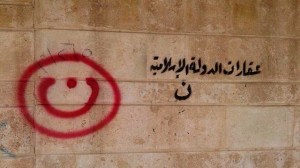
At the end of the day, it is a sporting drama which serves to distract us from the more chilling public shaming and marking occurring in the Middle East, in particular in the major Iraqi city of Mosul.

‘N’ for Nasrani

Some may think it is outrageous to link these seemingly unrelated events – Commonwealth Games spat and terrorist genocide – and yet the issues have jostled with each other for public attention, sharing page space and news feeds and pubic interest. They share the common theme, although of different scale, of those in power publicly ‘marking’ others in their charge and this is enough of a parallel for me.
Read More »

Atmosphere brings distortion but also life

image, SDO, lunar transit  NASA

‘Images of the eclipse show a crisp lunar horizon, because the moon has no atmosphere that would distort light.’

Atmosphere brings distortion but it also brings life. The moon may pose beautifully for photos but you wouldn’t want to live there.

So often the very things that bring potential for distortion or confusion or chaos or loss also carry along the things we value most, even life itself.

Passionate faith may lead to a life of unparralled service or unmitigated violence.

The ocean meeting land offers the pleasure of being carried along in majesty but sometimes being crushed and killed.

Love soars in our hearts and makes us feel invincible but can leave us stripped bare and dangerously vulnerable.

We can live to avoid all these paradoxes and be free of distortion – like a crisp lunar landscape black against a raging sun. Many seek to live this way and risk the greatest distortion of all.

Or we can dare a life of atmosphere and its light distorting quality and find strength and insight from a greater light that gives courage and truth enough to live and love well.

Perhaps when we look at one another and our atmosphere-cloaked world we should set aside sharp dividing lines and take greater pleasure in the wildness of us all.

Image Credit: NASA/SDO – the photo was taken by NASA’S Solar Dynamics Observatory on July 26, 2014.

More details here.

Postscript: I am particularly mindful of many people of all persuasions seeking to draw and redraw crisp, clear lines on our planet in places like Ukraine or Gaza or Syria or Iraq or many troubled places in Africa and perhaps even the oceans around Australia. (And I’m a fool if I don’t think I do it too.) Places where lines have never succeeded but the blurriness of atmosphere has allowed communities to coexist in risky but lovely peace. Set down your lunar linemarkers l pray… and breath.

No easy hope in The Narrow Road to the Deep North

‘But an easy hope is a fake one and that is far away from what Flanagan seeks to achieve in The Narrow Road to the Deep North. There are no living gods in Flanagan’s war and post-war and that must have been the feeling of many, but not all, who lived and died or lived and lived.’

Read my review of the only Australian novel to be long-listed for the Man Booker Prize at cread: reading is believing.

More than a label

image

I was walking in the sunshine at University of Sydney with my little grand daughter who needed a short break from church in the old Geology building.

We came across a tree (pictured) with beautiful patterned bark, soft and flakey, and gentle spindly branches that were almost silhouetted against the blue sky.

I laid my hand against the trunk and felt its warmth and encouraged Maddison to do likewise. She reached across and rested the palm of her hand on the tree.

I stepped back to photograph the tree which had won my heart and as we began to move on I noticed a tag or label nailed to it.

Read More »

Something’s happening in Ukraine

Something’s happening in Ukraine
Yet the pictures don’t make sense
Seems some tourists must be visiting
Hope the locals don’t take offence

I see them lolling among sunflowers
I see them resting where they lay
Surely frolicing in green fields
Or dropping by for a farm-stay

Now they climb aboard the green train
More sightseeing must be their plan
Perhaps to Gaza they wiĺl travel next
It’s more than I can understand

That’s enough, we want you back again
Lovely travellers please come home
Yes something’s happening in Ukraine
You should not be there on your own.

PH

‘It is nothing’ – the assassination of Franz Ferdinand

To mark 100 years today since the assassination of Archduke Franz Ferdinaz of Austria and his wife Sophie, here’s a chapter from my unpublished WW1 novel, Shot: a great war story, that among other things retells the events of that day.


June 28, 1914

‘One comes here for a visit and is received with bombs…. It is outrageous!’

Franz had never felt so furious. How could this be, how could they let this happen? To think that his life and that of his Sophie had been in mortal danger from the actions of some fool in the crowd.

He saw again the slow loop of the explosive as it headed towards them, first bouncing off the bonnet of the car, before he had instinctively swatted at it, knocking it away. Then only to learn that Eric and the Count had been badly wounded in the car behind. And now this simpleton of a mayor is intent on giving a welcoming as if nothing has happened.

The scorn of his uncle and the Imperial court over this debacle would be insufferable, Franz thought, when he felt Sophie take his hand. She was standing by his side at the top of the town hall steps, where they were supposed to be basking in the warmth of an official welcome and the appreciation of the people, and where a stunned mayor stood fingering his notes.

What point is there after what has happened? Franz thought. Someone has tried to kill us! The realisation of how naïve he had been, how unrealistic, began to dawn on him. He turned to Sophie, feeling her trembling, seeing her lip quiver, and reached to wipe a tear, then noticing a slight graze on her cheek.

‘Sophel, oh my dear wife, I see you have been injured in the blast. My God, how close we have come to tragedy!’

She flinched from his touch, produced a handkerchief from her sleeve and dabbed at the graze.

‘I am all right, Franz, do not fuss. We must not be overcome by this. Look, the people do really love you,’ Sophie said,  whispering in his ear.Read More »

Unity and uniqueness

It’s good to stand together, prefer one another, consider others better, bear one another’s burdens, weep with those who weep and laugh with those who laugh. Re-digging the ancient wells of your father. It’s good to follow the narrow path, hear the call of God, use the gifts you have, make the most of the […]

I finished a novel and didn’t notice

I’ve been stealing moments to write my first novel for so long now that when I wrote the last scene I was caught unawares.

Tidying up some spelling and rushed typing I saved the file and then noticed that the pressure to go on, to finish, had gone.

Then I realised. That was it. The place I had always planned to end had been reached. It was over.

So I immediately began re-reading and re-writing….

While the breadth of the novel is complete, the depth and dimension no doubt will require some work.

And in the end, who knows if anyone but me will read it.

Not to worry, I don’t care.

Still, I did submit it to a publisher today.

If you are interested to know more, leave a comment, I could be enticed to share a few details from my secret life of writing.

I’d say 100 comments might be enticing enough….

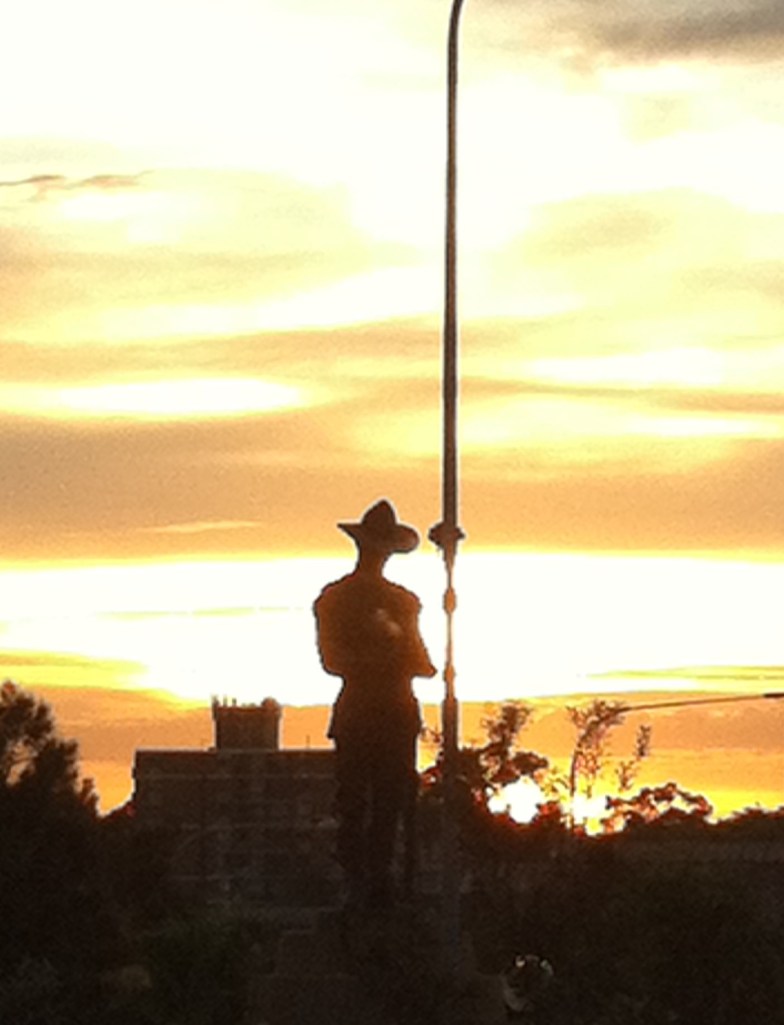
Good Anzac

While leaders erred their courage held
Bloodied birth waters for a young nation
Anzac Day.
Not so far from there a crowd yelled
Bloody minded in their mob betrayal
Good Friday.

Quiet days that soar still on our modern calendars
Far places weighing on our clever consciences
Calvary and Anzac Cove say, ‘Not my will, lest we forget’.
Great defeats born with blood, borne by love
Teaching us still decades, centuries, eternally
That winning is not always won in victory
But sometimes by the brave, in loss.

The good die young, die in sand and mud, die in their thousands
And we remember them, more than ever, more than mostMoved and strangely weeping.
But listen, echoing along with shuffling feet on dawn’s street
The sound of metal striking metal
Wood giving way, and flesh
And the cry of an only Son
Who dies on a tree, dies with scorn, dies alone
Not my will, lest we forget.

Peter Hallett

Love over information

It’s the information age and big data is going to save us and the more we know the higher we will rise, don’t you know?

Or perhaps it’s just that we want to prove we know more than the next guy, that we are in the know, in style, across the game, up with the Joneses, not missing out.

And maybe when we hear what’s going on we can’t resist contributing our superior knowledge and experience, looking down by enlightening.

But verses today put paid to all of that, put the lie to our culture’s view that it’s all about knowing, all about filling our heads with headlines and computers with a million files or leaking someone else’s files to the world.

And of course information, data, knowledge is a tradeable power on earth, but not in heaven.

Oh, and the verses:

‘Those who think the know something do not know as they ought to know. But whoever loves God is known by God.’ 1 Corinthians 2,3

In other words, what ever you think you know is at best partly or minority known. But when ever you love you are competely and utterly known by the only One that knows everything.

Being known is what we all desire, at the heart of things. Love brings that, not knowledge. And just as well, or else all of us who know nothing would miss out.

Love over information.

Robert Kennedy, fighting into positive territory, letter to daughter

Fighting back into positive territory

Fighting back into positive territory is a cliche associated, most commonly, with the share market where it describes stocks, or indeed the whole market, moving from loss into gain.

Of course shares and markets are not personal beings that can fight back into anything and so it is a pity this phrase is so often wasted on the endless statistical variations of markets.

Where it is truly significant is in the story of human beings all over our planet who, against the odds, deliberatley and intentionally, fight back into positive territory.

An example I heard tonight was Senator Robert Kennedy, who shortly after the assassination of his brother, President John F Kennedy, wrote to his 12-year-old daughter:

‘Dear Kathleen, You seem to understand that Jack died and was buried today. As the oldest of the grandchildren, you have a special responsibility. Be kind to others and work hard for our country. Love, Daddy.’

‘Be kind to others and work hard for our country…’ – fighting back into positive territory.

This is one example among millions where people – confronted with loss, disability, disaster, sickness, suffering and tragedy – doggedly fight back into positive territory in their lives by choosing well on what to focus, on the words they speak, and the memories they entertain, or the perspective they maintain.

These are courageous, redemptive acts, all of them, and follow the great Redemeer at work in the world.

Keep fighting.

Decisions, decisions…


Everything flows from decision.
You can’t fail to decide because even that is a decision.
Decisions are like seeds, they usually contain more than you imagine.
Decisions can be unmade but their consequences tend to have a life of their own.
At some point we should accept the consequences and get on with making new – and perhaps better – decisions.


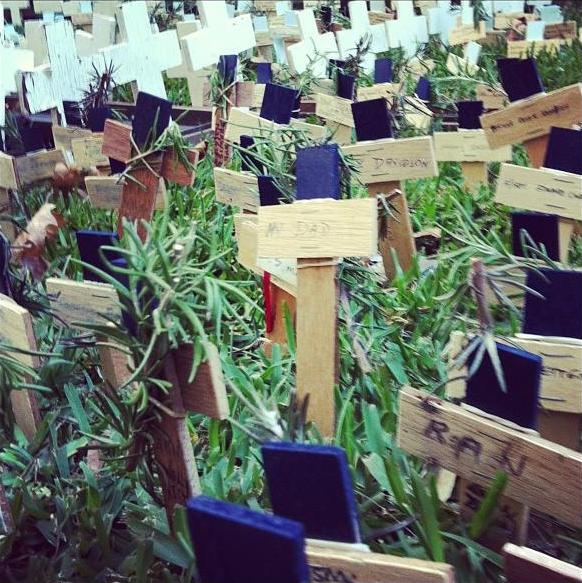
This Anzac Day, we have 23 million redemptive opportunities

Anzac Day 2013, Anzacs, redemption, Australia, Australian, 23 millionIn discussing the amazing opportunity that lies before the 23rd million Australian who joined us last night, Michael Pascoe says that perhaps the most significant thing about being Australian is redemption.

‘…it came down to redemption, to giving people a second chance.’

Pascoe says that while he hoped baby 23 million would make the most of its first chance at a lucky life, he agreed with John Menadue that being Australian is all about the great second chance. Here’s some of what Menadue wrote at Australia Day:

‘…whether Australian born, migrants or refugees an equal opportunity in life, a second chance. That ethos of redemption is a core part of our history…. A friend of mine, Ian McAuley, said that whilst the British sent the puritans to America, they sent convicts to Australia and that we got the better of the deal. The underprivileged and the outcasts in Australia got a second chance.’

We see redemption also in Anzac Day and perhaps this is why it has become such a powerful national symbol. Young Australians caught up in a military mistake, a tactical disaster and a human tragedy find a way to redeem this hopelessness through courage, self-sacrifice, comradery and humour. We may have lost the battle and many thousands of sons, but we bought at great price a sense of national identity and pride.

If that is true, if as Pascoe, Menadue and McAuley seem to agree – redemption is at the core of who we are – then there is great hope because national redemption is still needed.Read More »

Rev Bob Hammond,

Lord’s Prayer reveals divine priorities

Searching for ‘tweets’ in the writings of iconic Australian social reformer and evangelist Rev Robert Hammond, this comment stuck in my thinking:

‘The Lord’s Prayer does say: “And forgive us our debts,” but first it says “Give us this day our daily bread.”‘

In context, Hammond was suggesting before we worry about someone’s sin (wrongdoing), we should see to their daily needs of survival, in keeping with his commitment to practical Christianity.

This morning I woke early, and was thinking, among other things, of what other divine prioritisation we might see in a form of praying that came directly from Jesus. Whatever you think of Jesus, you would have to agree, understanding how he ordered his view of the world is worth considering.

Here’s a few early morning thoughts.

Our Father in Heaven: Not just God first, but relating to God so intimately that it transcends all of life and reaches to where God exists.

Hallowed (praised) be your name: Our choice to honour God’s identity, character, presence.

Your kingdom come, your will be done: His explanation of how to live purposely and perfectly now.

On earth as in heaven: Completing the circle – intimate relationship that honours the character and ways of God leads to a heaven on earth potential.

Give us this day: Not just ‘forever’ but living for today.

Our daily bread: Be practical about our (individual and communal) whole and healthy life

And forgive our sins: Be accountable for your own choices before God.

As we forgive others: Having the humility to acknowledge our own shortcomings means we might be able to release others from theirs.

Lead us not into temptation: Prepare for what choices we will face today by relying on God’s goodness.

Deliver us from evil: Prepare for the choices of others and the randomness of a broken world by relying on God’s goodness.

Your’s is the kingdom, power and glory forever: Come what may, be wrapped up in God’s completeness.

Amen: So be it.

The Lord’s Prayer, as it is commonly known to Protestant Christians, or the Pater Noster (Our Father) to many Catholics, is not so much a prayer, but a way of praying.

And as we have seen, it is also a way of living and seeing, today and forever.

PH

PS You can follow RBS Hammond on Twitter here.

Good Friday Fashion

Pockets of unbelief
Some bulging overcoat-size, fit the world in here Doctor Who style
Others faux, stitched, finger-blocking and smug, for appearance
Many inside jackets, back of jeans, silently or savagely stashed

Superior, mildly scornful, more dismissive, of my
Happy Easter greeting, not returned.

Broad swathes of just-believing cloth
But blowing in the wind, somewhat faded, trouser leg
Or sensible dress, unbuttoned sleeve, residual with faith’s fragrances
Pinched and creased and stained by paedophiles and penchants and pus

Didn’t even mention, neither for or against
Unobtrusive, benign, begrudging, slightly bitter? God, it’s Easter.

Collars, cuffs and hidden hems of belief
Heady justification, muddy footslog trailing threads and quick cuffs
Plunged diabolically or deliberately into pockets stirring
Or dipped in sweat of need or heartfelt hidden, hemmed in at home

Not just another day, more than a holiday
The core of my being, nothing more or less, forgive me Easter.

Good Friday fashion eternally of choice and destination
One garment disdained, gambled and divided and sworn
Another devotedly wrapped and wrapped and tears
And what will we wear world, garment of praise, garment of the age?

Lying still, pause for breath if nothing else
It’s a day that defies the pace and my mind turns to, strangely
Good Friday Fashion

…they divided up his clothes by casting lots.
…took the body, wrapped it in a clean linen cloth

PH