If remembrance reflects identity, let’s beware what we forget

Remembrance Day last week was highlighted by a preponderance of 11s – 11/11/11 at 11am – and reminds us that the events of time and space are not only measured by dates and location but by our less exacting recollections.

Memory and identity are in many ways at the heart of Julian Barne’s 2011 Booker Prize winning novel, The Sense of an Ending, which includes character Adrian quoting, ‘History is that certainty produced at the point where the imperfections of memory meet the inadequacy of documentation.’

If that is true, even in part, then all the more reason to have rituals of remembrance so that some things are not lost. Many of the world’s most memorised sayings or occurrences, such as those of the Christian faith, were passed down through oral traditions that perfected remembrance in a way we rarely do today.
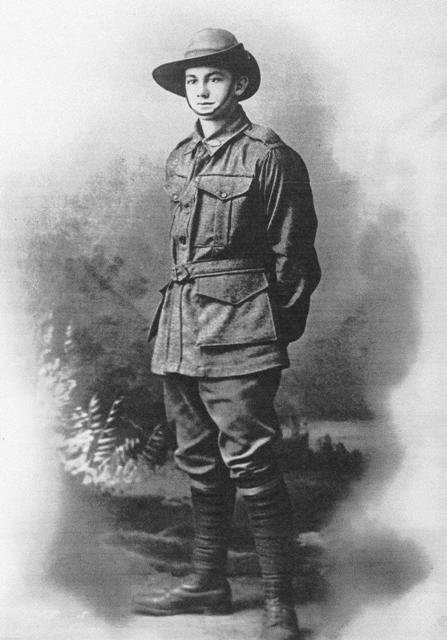
Roy Frederick Hallett

One such ritual is Remembrance Day which recalls for us Armistice Day, November 11, 1918 when hostilities ceased on the western front, virtually bringing to and end The Great War. It came too late for my great-uncle Roy who was killed in action on April 4, 1918 at Villers Bretonneax. He was one of 60,000 Australians who died in WWI and one of 11,000 or more whose bodies were never recovered.

The day before Remembrance Day I visited my sister’s grave because even though 17 years have passed since she was killed, we still remember and are still affected by her loss. We have a body, but no explanation as to who killed her and why, and so our remembrance is unsettled to this day.

It made me realise that as a nation, we must have been powerfully affected by 60,000 families all caught in a remembrance of loved ones lost. Even those who had graves to attend and accounts to read, would still have found the deaths of their loved ones hard to reconcile. Maybe our very identity as a people shifted through this mass remembering of those who would not return.
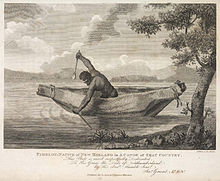
The only known image of Pemulwuy, one of the first Aboriginal leaders to resist white settlement.

And so we remember, through to World War 2 and it’s 40,000 slain Australians and onwards to today, including three more Diggers dying in Afghanistan. And while the casualties of war-time are just a part of the never-ceasing tide of life and death and birth and ageing that we are all part of, it is the sheer enormity of loss of life that these wars brought that stir us to find ways to remember, to acknowledge, to incorporate a sense of who we are through what has occurred.

But I fear that our remembering in this sphere is too often marked by what is forgotten or ignored as by what is recalled. The only number that comes close to the casualties of the two world wars, was that of Aboriginal deaths during frontier conflict across Australia.

While estimates by some writers of up to 100,000 Aboriginal deaths due to conflict with settlers is regarded as too high, many historians agree on a figure of about 20,000 Aboriginal people killed during a relatively short period as British colonisation of this land occurred. Perhaps 1-2000 white people were killed in these same conflicts which were, on more than on occasion, referred to at the time as the Black War or similar.

A mature nation, I believe, would realise that if white remembrance of the losses of war are vital to our sense of identity, healing and balance, then so too, or even more so, that of Aboriginal people. We cannot go back and undo these horrific losses for the first Australians, any more than I can go back and undo the death of great-uncle Roy. We can’t set aside the tide of history that produced colonial powers sweeping the globe any more than we can for the not dissimilar causes of World War 1 and 2.

But we can acknowledge that it happened – that many thousands of Aboriginal people died in attempts to defend their homes and their families and many more were killed in acts of revenge, extermination and ethnic cleansing so that white people would feel safe. We can acknowledge that this was and is brutally hurtful to those left behind and those that followed, and that it had far-reaching consequences then and now.

Are we ready as a modern Australian society to include in Remembrance Day or Anzac Day or Australia Day the idea that there is another great conflict at the heart of Australian identity and it is the one between Aboriginal and European?

It doesn’t mean that conflict need remain. Australia has rebuilt excellent relationships with many previous enemies – not by forgetting, but by remembering and at the same time, choosing to move forward. As to whether, when and how Aboriginal people may want to do this is another matter.

I fear our (white Australian) refusal to acknowledge this war in our past makes it harder for all of us, black and white, to enter into a peace that is authentic, just and durable. We can ignore it, but an unsettled loss rarely goes away on its own. That’s why we stop to remember year by year, so that in time the remembering hurts less and we are able to reflect and learn from our past.

Lest we forget.

Aboriginal standing stones could pre-date Stonehenge

The cultures of Aboriginal Australia have not been well respected or understood by those of us who have arrived in this great land more recently. So many opportunities to learn, understand and work together were missed, and continue to be.

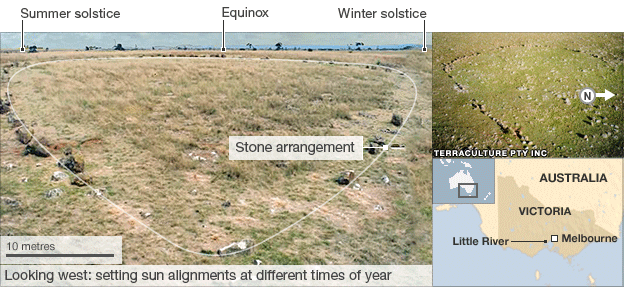
Little by little this is changing, in part to the gradual emergence of research and discovery that is filling in some of the many gaps. One example is research into a standing-stone arrangement in Victoria that may even date Stonehenge. The BBC report begins:

“An egg-shaped ring of standing stones in Australia could prove to be older than Britain’s Stonehenge – and it may show that ancient Aboriginal cultures had a deep understanding of the movements of the stars.

Fifty metres wide and containing more than 100 basalt boulders, the site of Wurdi Youang in Victoria was noted by European settlers two centuries ago, and charted by archaeologists in 1977, but only now is its purpose being rediscovered.

It is thought the site was built by the Wadda Wurrung people – the traditional inhabitants of the area. All understanding of the rocks’ significance was lost, however, when traditional language and practices were banned at the beginning of the 20th Century.

Now a team of archaeologists, astronomers and Aboriginal advisers is reclaiming that knowledge.”

Read more.

The Slap hits TV and may assault your senses

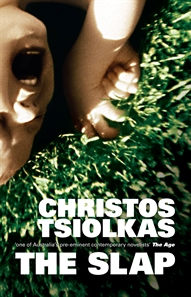
The television adaptation of Christos Tsiolkas’ 2008 novel The Slap is about to screen on ABC 1 and while it is a best-selling book in Australia and beyond, many of the television viewers will be encountering the story for the first time.

The Slap is an explicit novel – explicit in its treatment of nearly every bodily function and relationship dysfunction you can think of, or prefer not to think of. Oh, and did I mention the abundant use of legal and illicit drugs?

The television adaptation apparently holds little back and if that is the case, many will find reason why they can’t watch it, which is understandable, but a pity that some of the extremes of description were not moderated originally by the author. The story would not have suffered…

But that’s not his style and if you’re not sure if it’s your’s, check out a review of the book I wrote some time ago – it might give you some more insight, or a little more to offer around the water cooler tomorrow.

The Slap book review

Repentance baffles secular Australians

Repentance is a world rarely heard outside of a Christian or other religious gatherings and so it is no wonder Australian journalists have matched it with terms like ‘puzzling’, ‘scratching their heads’ and ‘bolt from the blue’ when reporting Papua New Guinea’s first Day of Repentance held today.

True, the public holiday for Repentance Day was announced in PNG with little fanfare or explanation and this has baffled reporters and some (mainly ex-pat) business owners.

But there is no doubt the very large majority of Christians in PNG know exactly what it’s about and many will have participated in prayer events held across PNG today.

Even the small Muslim sector of PNG society was in favour, with their leader’s only caution being that people should not think repentance is for only one day of the year.

One PNG blogger was pleased with the introduction of repentance day and discusses why it could be so useful on the basis that repentance means a change of mind. Nothing new can be done unless there is first a change in our thinking… good advice for any nation.

It’s interesting to consider that increasingly secular Australia is surrounded by many strongly religious nations. PNG, East Timor, Indonesia and many of the Pacific nations have strongly religious orientations.

An overflow of this has been seen in the prayers, songs of praise and statements of faith that have mixed with the outpouring of grief outside the home where 11 Tongan family members were killed  by a fire earlier this week.

Our prayers are with them.


‘Christian’ Kate wins MasterChef 2011

“What do you think Luke would say about what you’ve put up tonight?” MasterChef judge Gary Mehigan asked winning MasterChef grand finalist Kate Bracks, of Orange.
Read More »

Australian Cadel Evans wins Tour de France

Australian Cadel Evans has won the Tour de France after converting a 57 second deficit into a more than 90 second victory in the final time trial of the historic 108th year of the vent.

While the official finishing line awaited Evans on the final day of the race in Paris, his victory was sealed when he snatched victory during the time trial on the penultimate day of the event.

The day before, during the final climbing section of the race, a bike breakdown appeared to have left Evans far removed from leadership contention in the Tour de France. But an amazing fightback then brought him within reach of victory with just the time trial to come.

With the same steely resolved he has shown all race, and in fact for years of Tor de France competition, he finished the 42 kms in 55 minutes and 40 seconds, nearly three minutes faster than Luxembourg’s Andy Schleck who until then was leading the event.

Evans, now wearing the yellow jersey, led the contingent of riders into Paris with an overall race lead of about 96 seconds. Tradition dictates that leaders are rarely contested on this final leg, all he needed to do was finish the event with the main group which he did, riding onto the Avenue des Champs-Élysées as the first Australian winner.

Not much is known of the inner motivations of Evans other than he was a country boy who learned to ride a bike at a very young age, got used to riding alone in the country areas in which he grew up (around Katherine, Armidale, Barwon Heads) and that he once rode in a race with a Tibetan flag on his undershirt to support Tibetan freedom.

His mum, Helen Cocks, says, “He is a simple man who likes simple things. He will be the same Cadel [after winning the Tour de France], probably just relieved,” she said. And in Chiara, his Italian wife, she said her son had a partner who kept people’s feet firmly on the ground.

Oh, and he barracks for Geelong in the AFL – enough said.

Wikipedia supplies these biographic details for Cadel Evans:

Cadel Evans wearing the yellow jersey as winner of the Tour de France, 2011.

“Evans was born in Katherine, Northern Territory. He is married to Chiara Passerini, an Italian music teacher whom he met at the end of 2002. The two were introduced by a friend of her father’s. Evans inherited his surname from his great-grandfather who hailed from Wales, and his first name is also of Welsh origin (‘Cadell‘ being the name of three Welsh kings).[3] Evans attended Eltham High School in Melbourne, Victoria during his teenage years. In 2008, Evans wore a cycling undershirt with the Flag of Tibet and supported freedom for Tibet.[4][5] He said: ‘Trying to bring awareness of the Tibet movement is something someone in my position can do. I just feel really sorry for them. They don’t harm anyone and they are getting their culture taken away from them. I don’t want to see a repeat of what happened to Aboriginal culture [in Australia] happen to another culture.’ Evans has stated that it was his early years growing up in Armidale that was the inspiration for his cycling career. Additionally, the city’s higher altitude gave Evans an early edge in competition. Whilst living in Armidale, Evans attended Newling public school.”

Meanwhile, the elation in France is in stark contrast to the grief of Norway. While we weep with those who are weeping in Norway we take a moment to rejoice with those who rejoice in France and Australia.

A unique view of Cadel's winning time-trial effort, thanks to Paper Camera


AmazinGrace carries the cross in Jerusalem

The Amazing Race Australia on Monday, July 18 will feature some of the four remaining teams carrying large wooden crosses through the streets of Jerusalem as part of the episode’s challenges. Check out a preview.

In a city so taut with religious and cultural tensions, it is a daring and perhaps provocative act, that recalls for Christians the crucifixion of Christ.

One of the effects of global tourism is to take long-held cultural, religious and historical events, locations and practices and make them marketable commodities for tourist consumption. While there are respectful ways of doing this, the Amazing Race epitomises the dilemma of rich tourists enjoying foreign lands while running the risk of carelessly trampling upon them.

In this case, a deeply significant religious symbol and act is incorporated into a reality show game in a city which is sacred for three world religions.  It is an ‘amazing’ clash of ‘realities’ and hopefully will provoke thought about the interactions of tourists and destinations; and even more so, about the meaning of ‘carrying your cross’.

The wooden cross (the exact shape is debated, but not important) was used for capital punishment in Roman occupied Israel around the first century AD. Part of the cruelty was at times to humiliate the condemned person by forcing them to drag the heavy implement through the city before they were nailed, tied and hung from it, dying a slow and painful death.

From the film, The Passion of the Christ

The New Testament records this being inflicted on Jesus, after a heavy beating, and is known by some as the passion of the Christ. This term encompasses not just his physical and mental anguish, but spiritual as well.

From a theological perspective, this was God in human flesh, suffering the worst humanity had to offer as identification with us but also as a substitution. Though perfect, he allowed himself to be punished as the worst of criminals and cut off from God so that we might be forgiven and re-connected to God.

So the cross is a powerful symbol of God’s grace extended to all. Perhaps it’s fitting that the show Amazing Race is also AmazinGrace…

At another level, Jesus often used the phrase, ‘carry your cross’ as a way of describing the challenge of following him. This must have been powerful imagery for his first century audience.

They would have seen or heard of the terrible journey through Jerusalem and other occupied cities of cross-laden people, heading for their deaths, under the ruthless eye of their Roman rulers.

To liken the life of a Christ-follower to carrying the cross, was a clear sign that it involved selflessness, vulnerability, suffering, obedience and a stretching of every fibre of being.

Not unexpectedly, it may not be the most popular influence for Christians (or anyone else) when making life choices, but thankfully we have the Amazing Race to bring it back to our attention.

While the cross-bearing exploits in the Amazing Race are a pale imitation of the real event, what’s more important is what we all do without the silent witness of the cross and the call of Jesus to carry it.

You may have never even heard of this call but it resonates through history and awaits your decision. After you watch the show, give the cross more thought…

Then Jesus said to his disciples, “Whoever wants to be my disciple must deny themselves and take up their cross and follow me. For whoever wants to save their life will lose it, but whoever loses their life for me will find it. Matthew 16:24-25

For the message of the cross is foolishness to those who are perishing, but to us who are being saved it is the power of God. 1 Corinthians 1:18

Lockyer’s last Origin moments captured on Paper Camera

This slideshow requires JavaScript.

Darren Lockyer played his last game of State of Origin rugby league as part of Queensland’s 34-24 defeat of NSW in front of a record-equaling crowd at Suncorp Stadium tonight.

The Australian, Queensland and Brisbane captain said before the game he wanted to finish with no regrets and he accomplished this with another superb performance personally and by his team.

There are few players who have carried themselves with as much control, dignity, fairness and talent as Darren Lockyer and so although I’m a NSW supporter, I could not for a moment begrudge his moment of well-deserved glory.

Tonight I also downloaded a new iPhone app called Paper Camera which has just been released and applies some funky and creative filters to your photos.

I was able to record (above) Lockyer’s lap of honour with some special effects. Enjoy.

And if we could all follow Lockyer’s ambition – to finish with no regrets – our lives would certainly be freer and lighter.

The Australian promotes John 3:16

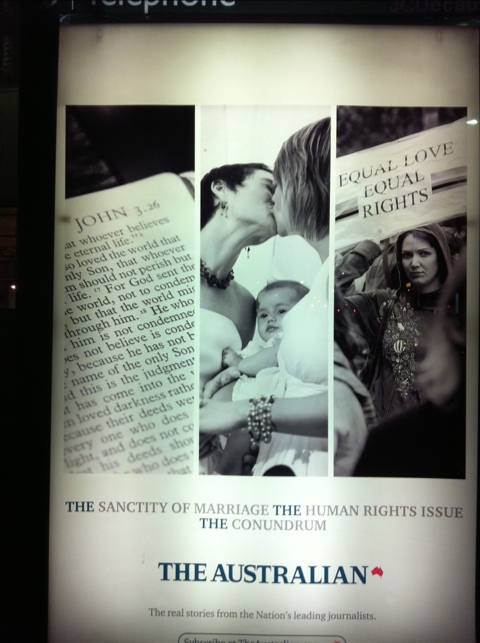
20110701-082028.jpgIt’s a rainy night on cold Norton St, but still plenty of diners and movie-goers are about. As I lift the edge of my umbrella to avoid colliding with two boys, one sliding on a wheel in his shoe, my vision slides across a poster and my brain computes iconic numbers and punctuation mark.

The advertisement on the back of a public phone pictures a Bible open to John’s third chapter.

The Australian is canvassing the issue of marriage but I wonder how many will recognise God’s shout-out to humanity contained in that ancient verse near the top of the pictured page.

‘For God so loved… gave his only… whoever believes… everlasting…’

If we don’t start there we’ll never understand anything else God has to say, about marriage or anything else.

Space provides hope for street sex workers

My only encounters with brothels and sex workers have been organising to have flowers distributed outside one of Sydney’s largest brothels in Camperdown during random acts of kindness events and trawling the area around Hollywood Boulevard, LA, in the early hours of the morning with a Dream Centre team.

In both cases the intention was to bring the kindness of God to an otherwise unkind corner of our society, hopefully surprising people with the news that God loves them.

Oh and there was one occasion on the bus from work when two young women, looking like uni students, sat behind me and begun discussing their ‘clients’. Being a consummate eaves-dropper I was soon shocked and got off feeling a little shaken about the world we live in.

So it is good news indeed to see a Christian community group featured in the Sydney Morning Herald because of complaints against sex workers – not making the complaints but being the object of them.

Baptist Church urban compassion ministry, Hope Street, has raised the ire of inner Sydney residents for running a support service for sex workers out of a Bourke Street, Darlinghurst terrace.

Established in April 1995, Women’s Space is described by Hope Street as a “safe place where we provide support for street-based sex workers and other women involved in the sex industry in inner Sydney, with a focus on encouraging those women who choose to make a change in their lives and supporting these women during and after the changes they make.”

About five street-based sex workers visit the centre each morning, according to the SMH report, and may seek counselling have a shower, get a new set of clothes or just sit in the sunny courtyard.

Coordinator Kay Syonesa said the women “can come here and have someone treat them as an individual whereas other places it’s: ‘just a sex worker’… they come here and it’s: ‘you’re human’.”

As the service only moved to the Bourke St location at the start of this year, the were asked to submit a development application to the City of Sydney and local residents have contributed 84 objections out of 88 responses.

One representative of the East Sydney Neighbourhood Association came up with this ‘impressive’ list of objections: “the street sex workers are homeless… it does not service the residents, it’s not compatible with the permissible use.”

Compelling reasoning… not. Kings Cross police have no problems with the service, street prostitution has not increased in the area and some residents are seeing the bigger picture: “It’s just pathetic, this idea of ‘not in my backyard. It will make absolutely no difference to these residents but it could do a huge amount of good for these women,” the resident told the SMH.

Let’s hope compassion wins over ‘not in my backyard’ as City of Sydney planners assess the development application.

Find out  more about Hope Street’s Women’s Space.

Check out this previous post:

Paul Moulds – into the dark places.

Man vs Stage – Bear Grylls live in Australia

As Bear Grylls’ book Mud, Sweat and Tears hits number one for sales in the UK, tickets for his Australian live stage show later this year are already selling fast.

The star of Man vs Wild will be in Australia for three shows in September with special guest hosts including Merrick Watts of Merrick and Rosso fame.

Grylls has previously been to Australia to promote Christianity introduction course, Alpha, and to speak at Hillsong.

For more information about Bear Gryll’s Oz visit, go to Australian Christian News. And check out a message from Bear below.

Pieters-Hawke and bonds of love and affection

Sue Pieters-Hawke has been in the news this week for an argument with Blanche d’Alpuget, wife of her father, former Prime Minister Bob Hawke.

The two women have reportedly been at odds over comments about Ms Pieters-Hawke’s mother, Hazel, in d’Alpuget’s biography of Mr Hawke. Hazel is suffering from advanced dementia.

The disagreement occurred at Brisbane Airport last Thursday and the next morning Ms Pieters-Hawke gave an address to HammondCare’s Rehabilitating Aged Conference in Sydney.

Listening to Pieters-Hawke, it was obvious she was passionate about the care of older people, particularly those with dementia.

In describing what she learned in the years spent caring for her mother, Ms Pieters-Hawke said, “My job description while caring for mum… was doing my best to help her maximize her own enjoyment of life. Her subjective sense of happiness and well-being was both the very point of me doing what I did and the ultimate measure of its value.”

As care for older people and the growing incidence of dementia are among the greatest challenges facing our communities, I encourage you to read the rest of my story about Sue Pieters-Hawke’s address. A more passionate advocate you will not find.

Offending sculpture creates spiritual precedent

Offending sculpture... cropped so as not further offend.

A court order for the destruction of a sculpture that is spiritually and culturally offensive to Aboriginal people creates an important precedent for other people of sincere religious or cultural conviction offended by “works of art”.

A NSW court has ruled the 8.5-tonne stone sculpture of a Kimberley Aboriginal spirit figure must be pulled down. The Wandjina spirit is sacred to three Aboriginal clans in the West Kimberley and its public depiction is deeply offensive to them.

The sculpture was erected at a New Age “wellness centre” and art gallery run by  Vesna and Damir Tenodi known as ModroGorje.  The couple are devotees of Anan-Do meditation.

Traditional Aboriginal owner Gordon Smith junior travelled to Sydney for the hearing.

“I’m very happy with the ruling. It shouldn’t have happened in the first place,” he said.

Worrorra elder and lawman Donny Woolagoodja said: ”The sculpture is a caricature … and its presence mocks and denigrates the spiritual beliefs of the Worrorra people.”

Given the power imbalance between Western colonisers and Aboriginal peoples, it is good to see the courts restoring the balance by protecting sensitive cultural material.

At the same time, religious symbols and icons of many kinds are fair game for misuse by popular culture and contemporary art.

Christians have for years struggled against offensive depictions of core elements of their faith such as the crucifixion of Christ but are usually labelled enemies of freedom of expression or simply wowsers.

Of course rushing into banning or destroying works of art is rarely a constructive course and sometimes material that seems offensive, such as Piss Christ, may actually be highlighting the very issues being discussed here – the cheapening of deep spiritual beliefs.

(Mind you, even putting those two words together makes me feel uncomfortable.)

I wouldn’t be surprised if it is indigenous people in our nation who lead us into rediscovering the importance of a spiritual life. Of course, a very large number of Aboriginal and Torres Strait Islander people hold deeply spiritual, Christian faith.

On a double-shot mission from God

Road distances (in kilometres) of towns and ci...
Image via Wikipedia

Seeing the phrase “mission from God” on the front page of one of Sydney’s Sunday papers (June 26, 2011) sounds great until you realise it is a tongue-in-cheek reference to an evangelist crashing his car on the Pacific Highway after downing a few double-shots of Scotch.

Jason Hooper is an American evangelist touring parts of Australia with a New Zealand born Australian evangelist Ben Hughes. Hooper crashed into a parked Hyundai in Macksville and was found to have a blood-alcohol level of .206.

He later appeared in court and was disqualified from driving in NSW for three years but otherwise escaped penalty, much to the chagrin of locals, motoring organisations, the police and the Sunday Telegraph.

The magistrate took into account Hooper’s remorse and good character but the Telegraph was not impressed with Hooper’s reported claim that God had already forgiven him for his error.

And true to form with Sydney papers, the Telegraph found a way to inculcate Hillsong into the story saying that Hooper was touring with “Hillsong protegé Ben Hughes” – a claim that made it into the second paragraph.

As far as I can see, the only connection between Hughes and Hillsong is that he studied at Hillsong Leadership College at some stage, along with many thousands of other people. Keep in mind, Hughes has done nothing wrong and Hillsong isn’t even involved, so why were they mentioned?

It’s very unusual to see people defined by a place of study when describing traffic incidents. I don’t recall former-Judge Marcus Einfield being described as a “Sydney University protegé” when his traffic indiscretions were reported.

But to bring Jason Hooper and Marcus Enfield together for a moment – they both have learned the special retribution we save for people who make a career out of saying one thing, and then doing the opposite.

No wonder James in his New Testament letter warned against becoming a teacher because you would be “judged with greater strictness”. In both these cases, the men involved may have not been judged by the courts over-strictly, but certainly they will be by the public and the media. (Einfield has had another traffic scrape this week.)

A good reason to remain humble, accountable and realistic about your state of well-being – and driving! And let’s hope the next time God get’s a mention on the front page, it’s for something positive…

Of evangelistic atheists and an everlasting kingdom

Amazing Grace, First version, in "Olney H...

The religification (my word, I think) of atheism is proceeding at pace and is part of an increased push in the Western world to remove Christian belief from public life.

Stephen Fry tweeted today, “If Christians rose up for Passion of the Christ, so humanists, agnostics, atheists etc might RT [re-tweet] the new film The Ledge!”.

The associated website describes The Ledge as, “the Brokeback Mountain moment for atheists, our tipping point, when we finally get the attention we deserve. Although books have put atheists into the intellectual mainstream, The Ledge is the first Hollywood drama to target the broader movie-going public with an openly atheist hero in a production big enough to attract A-list stars. This is unprecedented.”

Christians will notice close parallels with campaigns circulated through churches to rally support for movies such as Passion of the Christ, Amazing Grace, Bella and various other movies that were seen to authentically present Christian ‘heroes’ and messages.

Meanwhile the Atheist Foundation of Australia is launching a campaign to urge Australians to mark their census, ‘No religion’ as a way of limiting the influence of Christian beliefs in politics.

Read More »

And now atheists join the billboard conversation

First the Muslims, then the Christians, and just as Rev Rob Forsyth suggested, now the atheists.

The Atheist Foundation of Australia (AFA) is preparing for one of its “biggest and most important projects” – a billboard campaign to encourage individuals and families to “think about the importance and impact of their answer to this leading Census question: ‘What is the person’s religion?'”

As the next Australian Census approaches on August 9, there will be concerted campaign by the AFA to have nominal or non-believing people mark their census “No religion”. Their nominated motivation for the campaign – to take religion out of politics on the basis that if there is a larger “no religion” segment of the community, the views of Christians and other people of faith will be less influential in the political realm.

In the meantime, the political aspect of this campaign has led to one of their billboards being refused, much to the AFA’s loud dismay.

Read the full story in Australian Christian News.

Faith by billboard conversation continues

If you happen to commute along the M4 and also Victoria Rd (you are to be deeply pitied for that commute) then you may feel like you’re in the middle of a friendly, billboard-sized banter between a Christian and a Muslim. And the topic? Jesus.

Check out the full story at Australian Christian News.

Original billboard post
Forget billboards, they want to ban the  Bible

John Anderson receives Order of Australia

John Anderson, a devout Christian, Gunnedah farmer and former deputy prime minister in the Howard government, has been appointed an Officer in the Order of Australia in the Queen’s Birthday 2011 Honours List announced by the Governor-General.

The list provides national and formal recognition for many Australians across the nation who have made a significant difference to their communities. Mr Anderson is being recognised for his support of rural and regional  communities,  transport development  and water management initiatives when  in Parliament. Apart from being deputy prime minister. Mr Anderson was leader  of the National Party from  1999 to 2005. He was involved in the  creation of the National Water Initiative  in 2004 and as minister for  transport and regional services established the Australian Rail Track Corporation and the Agriculture Advancing Australia  program.

He was also president of the Parliamentary Christian Fellowship and continues to be a sought-after speaker on issues of faith and society. Earlier this year, Mr Anderson spoke at the Brisbane Lord Mayor’s Prayer Breakfast on the theme, ‘Lose the faith – lose the culture’.

“As a farmer, if you want to grow a good crop, you have to first till the soil in which a crop is grown. The crop of freedom, of democracy, of all of the good things that we take for granted in our lives, is in fact Christianity, and yet our society has moved away from it and so little understands now the soil in which the crops of freedom are grown, that I do not believe we can expect to continue to grow those crops.” Listen to rest of Mr Anderson’s speech on the Australian Christian Lobby site.

Read More »

Anglican Tim not quite ready to pop the question

Tim Mathieson was married to a woman who was a Liberal Party candidate, lost his licence for 16 months after driving with a blood alcohol level four times the legal limit and once owned a Gold Coast hair salon that is now owned by Tony Abbott (no, not that Tony Abbott!). Now he is better known as Australia’s First Bloke – the partner of Prime Minister Julia Gillard.

He is also a self-confessed, God-believing Anglican who claims he has not even discussed his faith with Australia’s most famous atheist.

Mathieson, recently announced as a patron of the Men’s Shed movement, appears tonight in a much-publicised interview on 60 minutes where he explains he will propose to Julia one day, but not any day soon.

“One wedding I think is enough this year,” Mathieson said, referring to the couple’s attendance at the wedding of the Duke and Duchess of Cambridge. And in previous interviews, Mathieson said when they do marry it would not be in the church, due to Ms Gillard’s beliefs.

Apart from his best known occupation – hairdresser – the one through which he met Julia Gillard, Mathieson has also been an importer of Levi Jeans,  supplier of marble interiors,  a sales representative for a hair products company and is current job is as a property agent with Ubertas Group, selling apartments in a St Kilda Road 50-storey complex.

Mathieson has two adult children from his marriage to Dianne Stark and another daughter fathered in his teens, Staci Childs, who is well-known hair stylist known for her tattoos, parties and celebrity clients such as Lady Gaga.

There are other, what might be regarded, dark moments in his history – broken relationships, failed businesses, car-crashes. In the long run he is typical of many people seeking to make their way through the maze of life who found himself in love with a woman who became Australia’s leader.

And he has endeavoured to make the most of his newly-found prominence and apart from his Men’s Shed patronship, he is also a Men’s Health Ambassador and works hard to promote men’s health issues around Australia. Ironically, the idea of taking up volunteer work was first suggested to him Therese Rein, wife of former Prime Minister Kevin Rudd…

The Australian Men’s Shed Association is a movement granting a special place for men who lack social outlets, to tinker and share stories over a barbecue.

Let’s pray that as Tim chats with men in sheds, interviewers in the media and his partner in the privacy of their home, that his faith moves to the foreground to inform his words, his choices and his into the future.

Forget billboards, Islamic leader calls for Bible ban

At a time when Christians and Muslims are conducting (mainly) respectful debates about large billboards with Islamic messages in Sydney, there has been a call in Pakistan for the Bible to be banned because it is blasphemous for Muslims.

The Jamiat Ulema-e-Islam party’s leader, Maulana Abdul Rauf Farooqi, at a press conference on May 30 in Lahore, informally petitioned the Supreme Court, complaining that the Bible includes stories about some of the biblical prophets that include “a variety of moral crimes, which undermine the sanctity of the holy figures.”

Pakistiani Christians, estimated at 3 million, fear the call for a Bible ban is a sign of a trend of deepening persecution against them.

Now might be a good time for people of Islamic faith enjoying democratic rights and freedom of religion in Australia to raise their voices against this call.

Read the fully story in Christian Telegraph

 Related articles