Dying while bringing sight to the blind

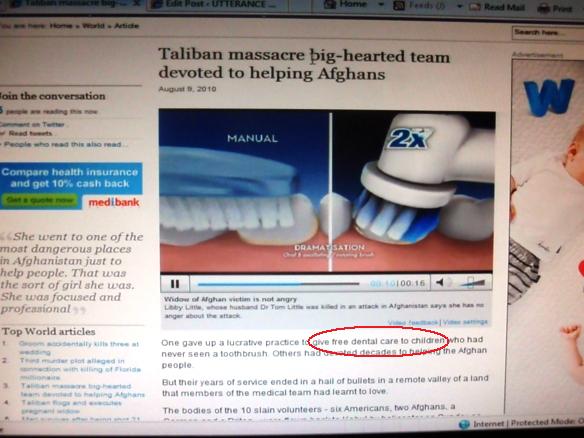
The headline read ‘Taliban massacre big-hearted team devoted to helping Afghans’ and accompanying the written report was a video featuring the widow of one those killed.

Before the video plays, on the SMH online site, it is preceded by an advertisement for electric toothbrushes.

The team killed in Afghanistan was providing basic medical care, including eye and dental care and one of the workers was a dentist who had handed out thousands of toothbrushes over the years, to children who had never seen one.

This juxtaposition reminds us of the implausible position we in the west too often take – that our wealth and freedom has no connection to another’s poverty  and restraint.

This post is in honour of the six Americans, two Afghans, a German and a Briton who were slaughtered on August 8.

Many of them were Christians, most having given up their life in the west to embrace life in Afghanistan so they could be an example of kindness and goodness.

Read the full report here.

Watch the video report (minus toothbrush ad) and particularly note the response of widow, Libby Little, as she calls down God’s mercy on those who killed her husband.

Read the full statement about the deaths from International Assistance Mission, the Christian organisation for whom the team worked. This is an example of a deeply committed, intelligent, genuine Christian response to the world’s poor.

Asking the poverty question.

Will we remember the world’s poor this election?

Everything from ear lobes to budgie smugglers to Mark Latham’s handshake has received media attention during the election campaign but quite a few serious issues have gone missing in action.

One life and death question for millions is this: Will Australia as a nation, and in particular, it’s would-be leaders, remember its responsibility towards the world’s poor?

When walking towards the start line of the City to Surf on Sunday I noticed one of the many homeless people who sleep rough in the city and was glad of two things – firstly that I noticed him and secondly that I can be grateful for what I have while sharing it to the best of my ability.

I’m sure many of my readers are the same, so let’s make sure our nation is committed to that path.

Check out Australian Christian Voter about how we call all put the poverty question to our politicians this Wednesday.

Faith shines, undaunted by broken bodies

I have witnessed holy moments this week, acts of faith largely unseen but shining brightly in an invisible kingdom. They have left me humbled and undone. The first I witnessed personally, the second through the eyes of others.

Standing in a rehabilitation hospital I am surrounded by septuagenarians and find myself playing the role of the younger generation, nice for a change.

The first stood, fire in his voice, to pray for his friend sitting in a wheelchair. The pray-er has this year come through life-threatening emergency surgery to remove a massive tumour that was destroying his spine. Remaining full of faith throughout, he feels more qualified to pray for healing, not less.

He wags his finger lovingly at his friend who finds herself in a wheelchair after tumbling down a cliff, breaking her neck and bruising her spinal column.  

‘Don’t ever think that God wouldn’t want to heal you just because you are old. He loves you unconditionally and wants you to have life to the full,’ he says. Read More »

Jeffry leaves us far too quickly

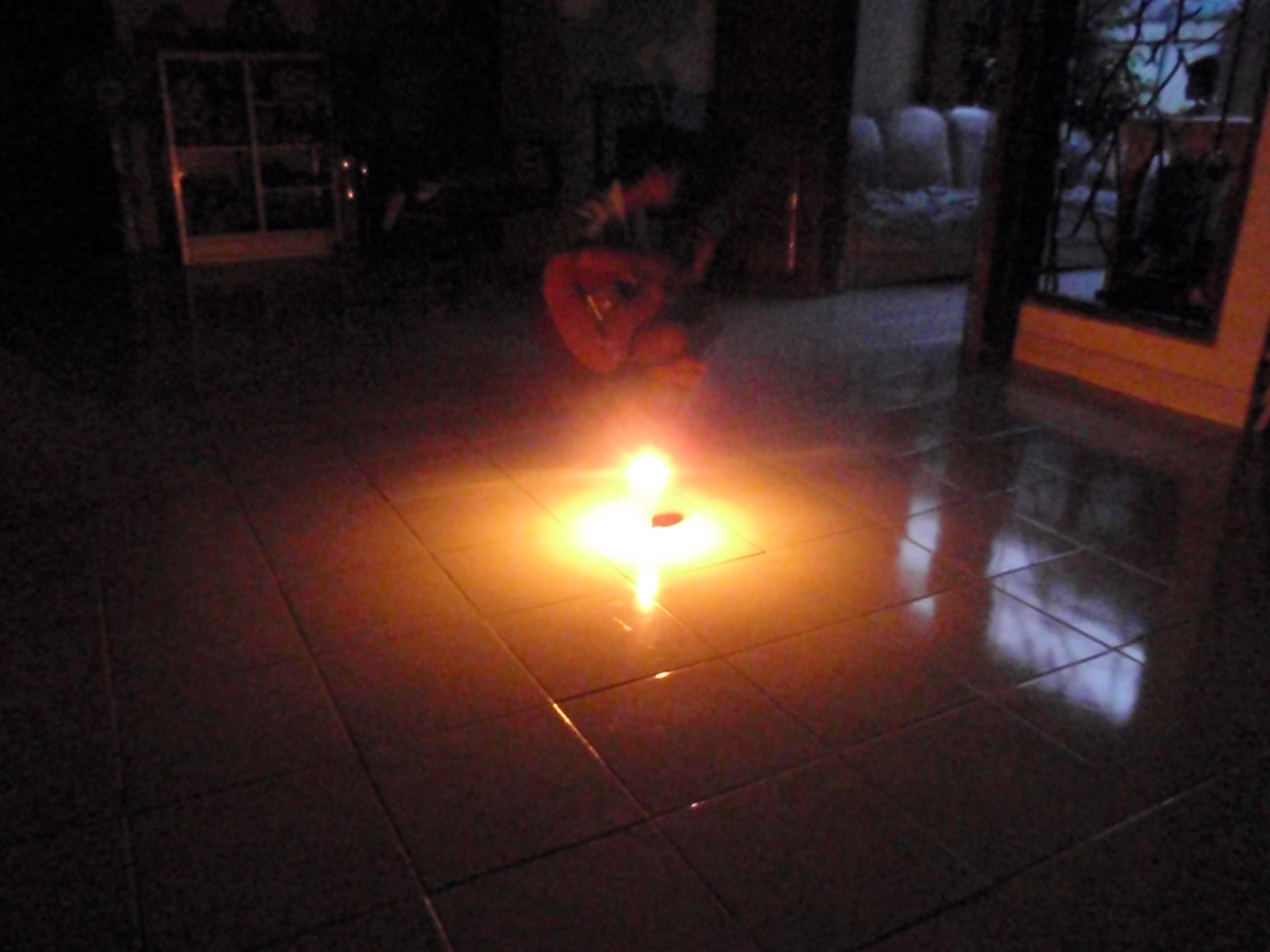
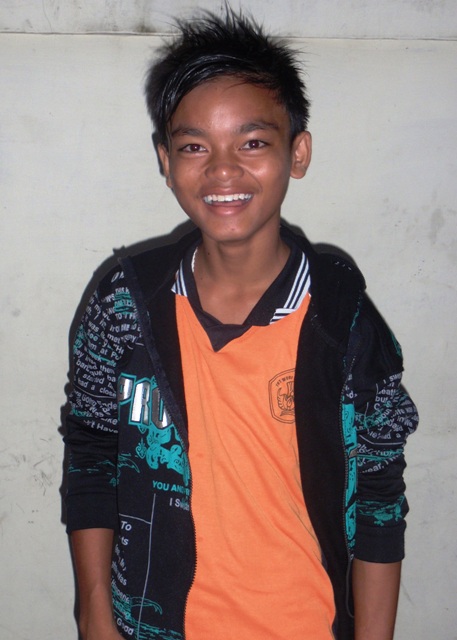
One of the boys lingers after morning devotionsOne of the last times I saw Jeffry alive was as we gathered around a single candle flickering on the white tiled floor of the children’s home in Bali.

It was the first time that I had stayed overnight at the home and, although the home-parents had set me up in my own room with a fan, a blackout had left me too hot to sleep.

As I listened to the noises of the night – geckos, frogs, dogs, babies – it seemed only moments before I heard the sound of children and adults rising to share devotions.

As the children began to sing, I shuffled bleary eyed from my room and sat on the floor among them. We sang to Jesus, candle shining, and the tiles providing at least some coolness.

Jeffry was there, nurturing the candle as boys love to do, singing with the others his love for God.

Later that morning – it was still only about 7am – I enjoyed a specially procured breakfast of fried bananas and took photos of some of the kids as they headed off to school. Four other boys travelled on the back of motor bikes, but Jeffry rode his bicycle.

I had ridden his bike myself a day or two before. It was just before church at the children’s home and I was wearing my preacherly best, but caught up in the playfulness of children, hopped on the bike, riding up the lane, much to the amusement of the kids and arriving churchgoers.

Jeffry loved to call my daughter (Rebekah) bebek which means duck. She would ask for the names of animals to say back, and her attempts left Jeffry and the children rolling with laughter.  

A couple of days later I flew home but that little corner of Bali, down a back lane in Denpasar, is never far from my heart, or my family’s.

There was no candle, no white tiles, no smothering humidity when I got up yesterday morning, heading to make coffee and breakfast.

I noticed a text had arrived on my mobile. I opened it and read: ‘P please pray 4 Novi, motor bike accident young Jeffry died Novi in coma we r at hospital.’ Later we learned a drunk rider had collided with the two children.

My own sadness at this news cannot be compared with my daughter’s who has used almost every available holiday in the past few years to visit these children. We can only imagine the aching grief of those whose lives entwined with Jeffry every day.

It was many years ago when I sat in the room of a small boy as he died of AIDS, contracted from his mother. He had spoken of visions of Jesus coming to his room to speak with him. These memories tell me that Jesus is never outdone by tragedy.

Experiences like that, like this, remind us that every child is beautifully special and that somehow God, in his great love, makes provision even in the darkest hours. Our prayers and our presence are part of that provision, the reason we care, that we go.

One of Jeffry’s  ‘sisters’ at the home wrote, ‘everyone very sad , and also still not believe that Jeffry must go quickly…’

It is true, he has gone far too quickly for us, but he finds himself in a place where time, or tears, will never bother him again. Till we meet again…

Politicians fail to deliver on asylum seeker policy

Check out some comment on the asylum seeker issue I’ve made on my other blog, Australian Christian Voter.

Christians, along with just about every other section of the community, are divided about how best to respond to the arrival of refugees by boat.

The politicians have no hope of coming up with cohesive policy because they are playing to political audiences. But Christians are often not much better, sniping at each other from behind entrenched views.

If a forum of Christians across a variety of perspectives could provide a united voice, we might actually lead the nation in a prophetic way. We need national Christian leadership to do this – it’s there I’m sure but where do we find it? PH

Mother reminds world of Justin’s Christian origins

“No 15-year-old wants to be around his mother 24/7. And no mother wants to be around her 15-year-old 24/7, either.”
Sounds like a pretty down to earth comment really and the interesting thing is that it was made by Pattie Mallette, the mother of 16-year-old pop star, Justin Bieber.

Ms Mallette has been in the news this week for reminding the world of her son’s Christian origins. In a discussion about the star’s commitment to remain a virgin until marriage, his mother said, ‘He’s expressed his desire to stay pure, and honour women, and treat women with respect. So hopefully that stays valid.’

Apart from the slightly obscene aspect of the world discussing a 16-year-old’s virginity, it is an intersting insight into ridiculous fame crashing headlong into real people in real family.

Pattie Mallette was just 18 when she became pregnant with Justin, who was born on March 1, 1994, in Stratford, Ontario. She worked low paying office jobs as she raised Justin as a single mother.

While Justin taught himself  to play the piano, guitar and trumpet by the age of 12, Pattie began posting videos of his performances on YouTube with a clear strategy in mind.

It seems that she had a strong Christian faith and at some point, as many parents do, had in a very real way ‘given’ her son over into God’s hands, seeing him as a possible modern day prophet Samuel.Read More »

Shroud evidence delights believers and sceptics in turn

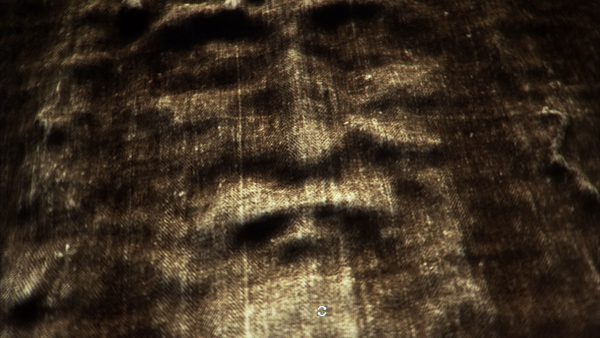
The 2D Shroud image transformed by 3D computer graphics

Weeks after posting a story about new three-dimensional imaging of the Shroud of Turin, Utterance continues to field search inquiries about the Shroud from around the world.

Fascination with this enigmatic cloth apparently never ends and no doubt has been heightened with the Shroud’s first public display in 10 years having just ended at the Cathedral of St. John the Baptist in Turin.

Another factor is the quest for faith or unfaith as some seek in the Shroud evidence of Jesus’s reality while others continue the quest to disprove him.

While Christ’s reality does not hinge on the authenticity of the Shroud of Turin (there are many other historical evidences), it is still a powerful symbol of faith for millions of Christians and a ‘thorn in the flesh’ for secular atheists.

Two recent Shroud findings are split between supporters and detractors. 

Read More »

Leichhardt goes 24/7 for World Cup

A boring looking letter arrived from Leichhardt Council yesterday, slightly damp from the persistent rain over Sydney.

Addressed to the householder, I was tempted to toss it (read recycle…) but decided to have a glance.

Turns out it was a development application covering virtually every cafe, hotel and restaurant on Norton St asking for permission to stay open 24/7 during the World Cup between June 11 and July 11! Talk about add some fire to winter!

The Forum, Norton Plaza and Palace Cinema are all included in the application – along with all the most authentic of Italian cafes.

Forget the soccer, I can’t wait to head down the street at 3am for gelato, cappuccino, amatriciana and some good old-fashioned Italian revelry!

Stay tuned for a blogestrated, middle-of-the-night, Italian food rendezvous (whoops, French origin word slipped in….) PH

Noah’s Ark claims highlight shift in global church

The Chinese-Turkish Noah's Ark team

Who claimed to find Noah’s Ark this week is almost as interesting as what they found.

The team is described as being led by ‘Chinese and Turkish evangelical Christians’. Neither country is renowned for freedoms given to evangelical Christians and yet here they are – exploring Mt Ararat, conducting press conferences and influencing Christian and world agendas.

It is a reminder of how the burden of Christian faith has moved from the west to the east. While the western church languishes in its past glory, the churches of Asia and even the Middle East are rapidly growing, fiercely faithful and increasingly see their mission to the world. But that’s a blog for another day. What of Noah’s Ark?

Christians are understandably nervous of mention of Noah’s Ark discoveries as the world’s press and scientific communities love nothing more than to pour scorn on poorly researched and prematurely declared discoveries. Perhaps the journalists and scientists are so ready to pounce because if a valid, scientifically-sound discovery is reported, they will all be forced back to their Bibles…

It is early days for this latest claim and Christians are among those that are wary of it.

In case you missed it, a Chinese-Turkish team from Noah’s Ark Ministries International held a press conference on April 25 in Hong Kong to present their findings and say they were “99 percent sure” that pieces of wood found at above 4,000 metres elevation and dated as 4,800 years old were from the biblical Noah’s ark. Read More »

We found you Roy, 91 years later…

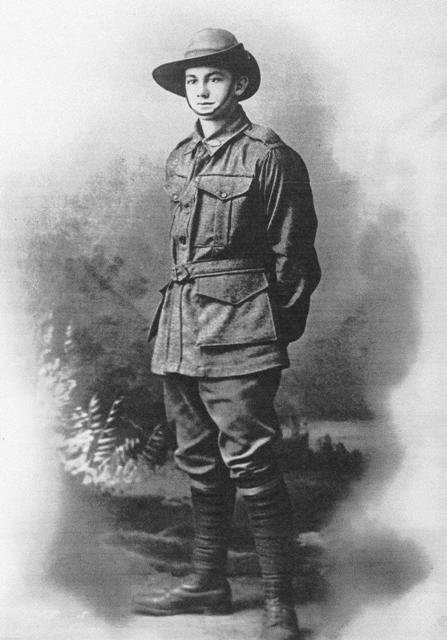
Roy Frederick Hallett

When I first saw the name R. F. Hallett carved in the stone of the Australian War Memorial, Villers-Bretonneax, France, in 2009, it was if it shouted out to me, ‘Hey, here I am, where have you been?’

I felt like Roy Frederick was waiting impatiently for someone to come find him, his body never recovered from the killing fields on which the memorial came to be built.

Under the warm sun and surrounded by the peaceful green fields of rural France, my wife and I had made our way from Paris to Amiens and then on to Villers Bretonneax as an act of remembrance for my father’s uncle who never returned from World War 1.

Ironically, Roy went to war with a bullet scar already showing on his foot, perhaps the result of an accident while hunting or working as a stockman.

Or maybe he belonged to gun club, as did many of those recruited around the same time, into the 36th battalion.  Ambrose Carmichael, Minister for Public Information led a recruitment drive from the rifle clubs of NSW in early 1916. The battalion became known as ‘Carmichael’s Thousand’. Carmichael led by example and enlisted as well, serving in the battalion as a captain.

Whatever the source of his bullet scar, he was to see much, much worse in his short but bloody tour of duty along the battlefields of Europe.

While Roy never returned, his scant belongings did and among them were two religious books. Our family history is not particularly religious but it sounds as if Roy may have found some solace in faith in the face of death.

The rest of his story, as gleaned from Australian war records, follows and is my contribution to Anzac Day… Lest we forget.

Read More »

Religion of hate loses touch with God of love

‘Many women who do not dress modestly … lead young men astray, corrupt their chastity and spread adultery in society, which (consequently) increases earthquakes.’ – Senior Iranian cleric,  Hojatoleslam Kazem Sedighi, as quoted by Iranian media. 

‘Thank God for eight more dead troops. We are praying for 8,000 more. We’ve turned America over to the fags; they’re coming home in body bags.’ April 16, 2010 Press Release from Pastor Fred Phelp’s Westboro Baptist Church, Kansas, US. 

If Mr Sedighi and Mr Phelps met in the street they would no doubt be mortal enemies, except they are speaking from the same script. One believes God is sending earthquakes to Iran due to short dresses and the other believes God is sending home dead soldiers because of the US tolerance of homosexuality. 

While these two ‘clerics’ might seem to be at opposite ends of the religious spectrum (Muslim v Christian) they are actually of the same religious spirit, just wearing different colours. 

Religion is a set of laws that people observe externally with scant regard for the state of their heart, or other’s. Power is gained by asserting these laws in ever-increasing measure to affirm one’s own superiority and to ensure the others sublimation. 

It is true that we live in a moral universe and that there is a way of living that is right before God. But none of us attain it and our only hope is not more religion, but a freeing relationship with the one who is always truth, and love.When the religious power-mongers of Jesus’ day brought an adulterous woman before him, he first reminded them of their own sin and then dealt graciously with the woman. ‘He that is without sin, throw the first stone.’ No stones were thrown and the only one entitled too, Jesus, chose to love, forgive and gently direct the woman to a better life – one that she found in following him. 

Now if Jesus didn’t cast a stone, how is that Mr Sedighi and Mr Phelps (and, let’s be honest, occasionally you and I)think they can? Because they have lost sight (or never known) their own brokenness before God and that in Jesus, judgement has fallen, been met, and the way thrown open for new life. Does God hate sin? Yes, because of what it does to people. Does God hate people? No, he died for them. All of us. 

A certain Australian pastor, who I’ll refrain from naming at this point, made some frighteningly similar remarks to these vengeful clerics in the context of the Victorian bushfires last year. It is to be hoped that he submits his theology to the crucible of his peers before making any more remarks like that… PH

Faith can be born in, and survive, a shipwreck

With critics claiming the Pope’s reputation has been shipwrecked by his inaction over the clerical abuse of children, His Holiness visited Malta last weekend to commemorate the 1950th anniversary of the Apostle Paul’s shipwreck near the island, an event recorded in the book of Acts.

Interestingly, the two issues came together on Malta when the Pope met with eight Maltese men, victims of sexual abuse by Catholic priests.

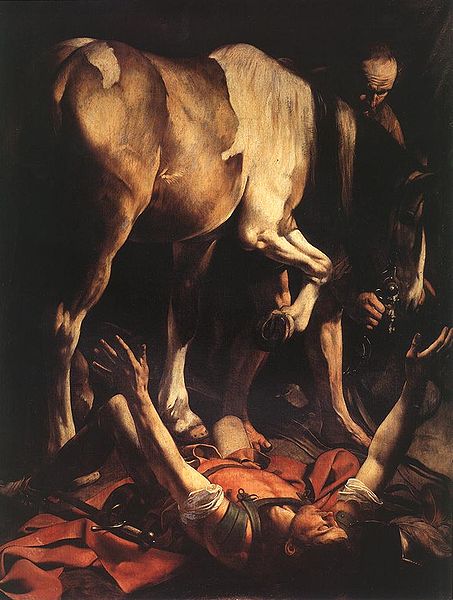
Conversion of Paul as depicted Caravaggio

The Sydney Morning Herald reports that Pope Benedict promised them with tears in his eyes that the Catholic Church would seek justice for paedophile priests and implement ‘effective measures’ to protect young people from abuse.

Benedict expressed his ‘shame and sorrow’ at the pain the men and their families suffered and prayed with them during the meeting at the Vatican’s embassy in Malta.
One of the men described the meeting as ‘fantastic’. ‘Everyone was crying,’ he said. It is the first time Benedict has met with abuse victims since the worldwide clerical abuse scandal engulfed the Vatican earlier this year.

While this meeting had not been foreshadowed by the Pope, he gave three other powerfully relevant reasons for his visit to Malta.

Read More »

Farm in a bag brings food to the slums

The greatest population  movement in human history is underway as people on all continents leave rural areas and flood into ever-larger cities.

Africa is no exception and one community organisation has devised a way to bring the farm to the city, even the crowded slums of Nairobi, Kenya.

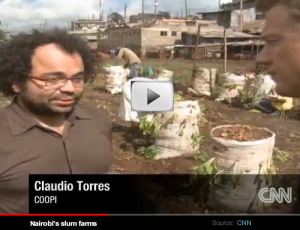
Life is hard in Nairobi’s densely populated slums but thanks to the innovative farm-in-a-sack project, some residents at least are able to return to their agricultural roots.

Poor families in the Mathare slum are given more than 40 seedlings which can be grown into food in just a few weeks. And even though the streets are narrow and garbage is strewn everywhere, mini-farms are cropping up on spare land.

The project was started by the Italian organisation Cooperazione Internazionale  (COOPI), which brought in rural agriculturists to teach community groups how to create vegetable farms in the slums.

COOPI provided each participating household with one sack containing soil mix and 43 seedlings to cultivate: 25 spinach, 15 kale, 2 capsicum and 1 spring onion. 

The vegetables can be harvested many times for at least one year. Capsicum and spring onions provide passive pest control instead of chemicals while the spinach is a rapid growing source of nutrition – sometimes even growing out of the side of the sack before being properly planted.

Claudio Torres, from COOPI, said of the project: ‘There are two effects. First people really have more food,  nutrition and micronutrients. But also, this brings together the community.’

Earlier this year, it was inspiring to meet in Sydney Pastor Evans Mage from Nairobi who is planting churches through the slums. How amazing it would be to join his spiritual planting with this natural planting, to truly change lives. PH (Source: CNN)

Finding faith in a crazy world

Pope arrest plans, church championing hate, trusting God safe again and league star driven to thanks… A God’s-eye overview of some of the madness, mayhem and moments of clarity involving issues of faith in our world currently.

Read More »

One year on, a fresh look for Utterance

I wrote the first blog post of my life on April 27, 2009, nearly a year ago, but it wasn’t until a hastily conceived New Year’s Resolution that I got serious about blogging (nearly) every day.

Utterance’s first thousand hits took about 10 months and the next two thousand just two months – I still marvel at those sites that have millions of hits in a day!

I’ve had some amazing feedback in that time, learned a great deal and rediscovered the joy of writing (if not, perhaps, the skill). I have even at times felt like a journalist breaking news – it’s hard to get the printer’s ink out of your blood (sorry, old journo saying…)

The full version of the Utterance header photo

To celebrate a year of Utterance, and to reflect the change of seasons, I’ve employed one of WordPress‘ favourite themes, Misty Look. The photo in the header was taken by myself at Hawkeshead in the Lake District, England. It shows a gate, a tombstone and a rather shiny clock on the old cathedral. Quite symbolic I think, but I’ll leave you to consider the conjunction of these elements. Happy reading and don’t forget to breath – speak – and breath again…PH


Wellbeing snapshot shows huge divide

Imagine you were asked to rate your current life between zero and 10 and your life in five years time? As you chose a number to describe your sense of wellbeing now and prospects for the future, would you be thinking of how you are feeling today (not enough sleep last night… stressful meeting at work today…) or rather the underlying factors (good health, housing, employment, stable government, personal freedom). How might your faith affect your view?

Social researchers at Gallup have collated a global snapshot of wellbeing using data collected in 155 countries or areas since 2005. Gallup classifies respondents as ‘thriving,’ ‘struggling,’ or ‘suffering,’ according to how they rate their lives based on the Cantril Self-Anchoring Striving Scale:

Please imagine a ladder with steps numbered from zero at the bottom to 10 at the top. The top of the ladder represents the best possible life for you and the bottom of the ladder represents the worst possible life for you. On which step of the ladder would you say you personally feel you stand at this time? (ladder-present) On which step do you think you will stand about five years from now? (ladder-future)

According to separate research, people tend to answer these questions from the perspective of life evaluation (judgements of life) rather than daily affect (feelings). It is called a self-anchoring scale because it allows people to interpret their wellbeing from their own perspective rather than external measures such as how much money they earn, levels of education or political conditions.

In other words, if the research is to be believed, people across the globe are saying, ‘this is how I feel about my life’ not on the basis of  ‘I have a headache today’ but on the basis of ‘I feel my life looks like this’. A poor person in Africa might actually feel very happy in the midst of their poverty but when stepping back and assessing their prospects, they realise they are up against it and so report low ladder scores. A rich person in Denmark might be feeling gloomy in the midst of their wealth but when stepping back to view their life, realise they have plenty to feel confident about.

So what were the results of Gallup’s global wellbeing research? It reveals a vast divide that underscores the diversity of economic development challenges around the world.

Read More »