Whatever interest there has been in the Royal Wedding to this point, it has almost been overshadowed by one small act of affection, the Royal Kiss.
As much as people have been caught up in the pageantry, celebrity and history of the Royal Wedding, humanity seems to crave even more the intimacy, reality and spontaneity of two people touching lips to show their love.
Prince Charles and Princess Diana were the first royal couple to kiss on the balcony of Buckingham Palace, and it is rumoured that Charles first paused to ask permission of the Queen, which was duly granted.
Now William and Catherine have given their own romantic demonstration, as if to anoint the vows that went before, accompanied by the oohs and aahs of a couple of billion television viewers.
Many television commentators, swept along by the great sense of good ‘will’ accompanying the wedding, have spoken of the couple as carrying with them the hopes of a new generation and a renewed era.
But a marriage is more than a wedding service and balcony kiss (or two), and hopefully William and Catherine have taken time to learn the lessons of the past and will find their way to live with wisdom, balance, faith and, as their prayer from the wedding mentioned, generosity.
The Bishop of London, the Right Reverend and Right Honourable Dr Richard Chartres gave a stirring Address at the wedding of Prince William of Wales and Miss Catherine Middleton.
Billions around the world heard Rev Chartres urge William and Catherine and all listening to set the world on fire by being who God meant us to be.
He also highlighted that every wedding is a royal wedding in the sense that every bride and groom are kings and queens of creating new life.
Rev Chartres said that in marriage we are to make our spouse our ‘work of art’ while at the same time not placing on them a burden of expectation that only relationship with God can carry.
Interestingly, the sermon included a prayer composed by William and Catherine which asks God’s help in keeping their eyes fixed on what is real and important and to help them to be generous with their lives, ‘to serve and comfort those who suffer’.
Read the full sermon:
‘“Be who God meant you to be and you will set the world on fire.” So said St Catherine of Siena whose festival day it is today. Marriage is intended to be a way in which man and woman help each other to become what God meant each one to be, their deepest and truest selves.
‘Many are full of fear for the future of the prospects of our world but the message of the celebrations in this country and far beyond its shores is the right one – this is a joyful day! It is good that people in every continent are able to share in these celebrations because this is, as every wedding day should be, a day of hope.
In a sense every wedding is a royal wedding with the bride and the groom as king and queen of creation, making a new life together so that life can flow through them into the future.Read More »
On April 26, outstanding Greek-Australian preacher, evangelist and teacher, Con Stamos, died after a three-year battle with cancer.
Always larger than life, Con’s outstanding ministry reached many areas of Australia, notably the Aboriginal communities of northern Australia and the eclectic residents of inner city Sydney.
In a letter to friends written in early March, Con acknowledged the seriousness of his condition but was far from subdued:
‘Time is God’s domain. Mine is to live this life to the fullest.’
On April 27, Rev David Wilkinson, the founding pastor of Times Square Church in New York City and author of the well-known book The Cross and the Switchblade, posted a blog titled When All Means Fail.
As if writing for Con and his family, he had this to say:Read More »
The European name for the area known as Trinity Beach, far north Queensland, originates from Captain James Cook’s exploration of Australia in 1770.
He passed by this section of coastland on or near Trinity Sunday, June 10, 1770. The traditional owners of the region are the Gimuy Yidinji.
It is the first time possibly in my life that I did not attend a church service over Easter but being surrounded by family and God’s preaching through creation, ensured a deeply spiritual experience.
A band of cloud crosses the reflected light of the moon producing the image of a cross. The light also produces a key-hole shape.
After a cross-shaped image created by the full moon on Good Friday, Easter Sunday's sunrise did not fail to bring a powerful feeling of resurrection.
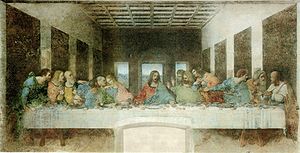
Media outlets are today reporting claims from a new book that Easter celebrations are a day late in marking the celebration by Jesus of the Passover before being crucified.
Many close readers of the Bible who have studied the Gospel accounts of the last week of Jesus’ life would have already considered the possibility of the Last Supper occurring on the Wednesday, rather than Thursday, before Good Friday.
The Gospels are not motivated by a desire to inform readers of exact dates – presuming early Christians were already well aware of these, or because they were focused on the content of Jesus life and teaching rather than chronology.
However as an historic faith, it is heartening to see scientists seeking to test accounts and find explanations for these eye-witness accounts, handed down over many centuries.
And while this latest book is unlikely to change the way Christians celebrate Easter (although perhaps we could argue for an extra Easter holiday?) it is a useful reminder that Easter is more than religious tradition, it remembers extraordinary events in the lives of real people, one in particular.
“‘One of the most famous meals in history is commemorated a day late, a new book by a Cambridge University physicist claims,” the SMH report says.
“Professor Sir Colin Humphreys, who was knighted last year for his contribution to science, argues that the last supper Jesus Christ shared with his disciples occurred on Wednesday, April 1, AD33, rather than on a Thursday as traditionally celebrated in most Christian churches.
“The theory would explain the apparent inconsistencies between the Gospels of Matthew, Mark and Luke – which say the Last Supper was a Passover meal – and that of John, which says Jesus was tried and executed before the Jewish festival. It would explain another puzzle: why the Bible has not allowed enough time for all events recorded between the Last Supper and the Crucifixion.
“Sir Colin’s book, The Mystery of the Last Supper, out this week, uses astronomy to re-create calendars, plus detail drawn from texts such as the Dead Sea Scrolls to propose a timeline for Jesus’s final days.”
Two prime time television shows and classic re-run featured characters discussing the merits of church attendance and Christian faith in the past week.
Channel 7’s Packed to the Rafters this week had character Nick ‘Carbo’ Karandonis telling his girlfriend Loretta ‘Retta’ Schembri that she would have to convert to the Greek Orthodox faith for them to be married. She replied she would not convert as she didn’t believe and it would be hypocritical. She also questioned the sincerity of Carbo’s faith, given that he claimed to be Greek Orthodox and never attended. So they attend church together and afterwards Retta says she felt the spirituality of the service and wants to attend every Sunday. Carbo is horrified that she might take faith seriously and the theme is set to continue in the show – next season.
Channel 10’s The Good Wife saw Grace Florrick challenging her mother Alicia about belief in Jesus. Mrs Florrick, the good wife, replies she believes Jesus was a person who lived 2000 years ago and she couldn’t see what impact he had on her life. grace replies that you either ‘love Jesus or hate him’, there’s no middle ground. She further argues that she is an intelligent person who believes in Jesus, and that the two things aren’t mutually exclusive. The episode finished with Mrs Florrick agreeing to take her daughter to church.
And a classic episode of Everyone Loves Raymond screened on one of the digital channels. Titled The Prodigal Son, it features Raymond arguing with his parents about going to church. Also, his wife and children go to church every week but Raymond refuses to go. After some hilarious interactions, the episode concludes with a serious discussion of church going and faith between Raymond and wife ?
‘Why don’t you go to church Raymond?’ she asks. And after complaining that all the kneeling is hard on his knees, the focus moves to ideas such as parents wanting to pass on their values, feelings of guilt and the need to believe in and be part of something bigger than ourselves.
When Raymond turns the questioning back on his wife, ‘Why do you go to church?’ she replies, ‘To say thanks for you and the children… and to pray for strength to get through another week with you and the children…’
Hopefully Australian households are discussing faith in a similarly open and revealing way and perhaps these episodes are a case of art imitating reality.
While the conclusions drawn, arguments used and theology displayed are not always satisfying, it is encouraging that writers and producers are willing to include spiritual, faith and religious issues (very occasionally) as themes for their shows.
Check out a small part of the final ‘church’ conversation in Everybody Loves Raymond…
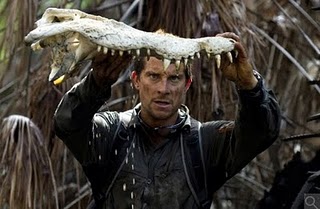
Bear Grylls featured on Channel 7’s Sunday Night program tonight where besides eating spiders and leaping out of helicopters, he was also shown visiting Hillsong last weekend.
Admitting that speaking to an auditorium full of people is scarier than most of his Man vs Wild adventures, he also revealed how he got his nick-name, Bear.
Rather than arising from ‘wrestling a bear when I was 3’, Grylls explained that his real name is Edward, which was shortened to Ted, and then Teddy, on to Teddy Bear and finally just Bear.
So one of the world’s toughest men is named after a soft toy…
Described on the show as a ‘man of God’, Grylls once again acknowledged the importance of Christian faith in his life and the importance of prayer.
For more on Bear Grylls and his views on God, visit my previous Bear post. He also has his own blog where he describes making a show in an Australian swamp as one of his hardest yet. You might also like to visit the charity page on the blog, and see how he uses his fame and fortune.
Speaking of which, he said fame and fortune were two things that caused him the most trouble which may be why he supports so many charities.
Oh, and the worst thing he’s eaten was a toss-up between raw goat testicles and bear poo…
We’ve all had a chuckle or two at the Justin Bieber phenomenon and wondered how long it would last. I even thought of buying my son a Justin Bieber t-shirt as a tongue in cheek joke.
But listening to the radio today I noticed someone crooning about closing their eyes to pray for a better day on behalf of those doing it tough. When the song credit was for Justin Bieber, I decided to have a closer look:
I just can’t sleep tonight,
Knowing that things ain’t right.
It’s in the papers, it’s on the TV,
It’s everywhere that I go.
Children are crying, soldiers are dying,
Some people don’t have a home.
Pre Chorus:
But I know there’s sunshine behind that rain,
I know there’s good times behind that pain (hey)
Can you tell me how I can make a change?
Chorus:
I close my eyes, and I can see a better day,
I close my eyes and pray.
I close my eyes and I can see a better day,
I close my eyes and pray.
When someone uses their fame to ask people to consider the needs of others, questions their own role in making a difference and encourages us to take time to pray, it deserves acknowledgement.
And to highlight the benefit that flows when popular culture turns its attention to serious issues, consider these comments on the Close My Eyes and Pray page on a popular lyric website:
‘every time i hear this song i cry and it is sooo sad and true im trying to change things too…‘ and
‘i think this song is very helpful to ppl out there because the first time i heard this song i cried…there’s so many ppl out there that don’t even care about the poor.so thank you justin for making this song.WE LOVE U!!!:)’
If you still aren’t sure, check out the YouTube clip and you may become a believer. Anyway, for what’s a worth, I’m a (kind of old) fan Biebs. I’ll be praying you don’t lose your way…
So, I’ve had a very long case of writer’s block. More writer’s coma than block. More writer’s near-death experience than coma. More…
Anyway, I’m just searching for that sweet-spot of an idea for what to do next. Don’t tell me, I’ll get it eventually.
In the meantime, it did spark my interest that the 7pm Project discussed falling church attendances tonight. Tellingly, they quoted no hard statistics, quoted a minister from a denomination with famously declining membership due to its abandonment of faith, and quoted an atheist who is too young to have any idea if there is a God or not because he hasn’t lived long enough to have a single conviction tested. Or so it seemed to me.
Host Carrie Bickmore admitted her mother had dragged her along to Hillsong, Steve Price had the usual hackneyed response about churches and money and Hughesy said that if it makes people happy and gives them good values then what’s the problem. The too-young-to-know atheist pondered what would happen without the community that religion provides, but failed to give an alternative.
Oh, and by the way, on a different note, I’m reading my first Ernest Hemingway book, Death in the Afternoon, which is non-fiction and about bullfighting… well, it was the only Hemingway available at Leichhardt Library – but already I’ve gained a few insights into his approach to writing, which may or may not be a good thing.
I’ve been buying The Big Issue on and off for a while and more recently have bought it twice from the vendor in Central Railway Pedestrian Tunnel who once welcomed me as a good-looking second-row forward. I’m still trying to work out if that was a compliment or otherwise.
The Big Issue is ‘an independent current affairs and entertainment magazine sold in towns and cities throughout Australia by people experiencing homelessness and/or long-term unemployment’. Vendors are full trained and make $2.50 from each magazine they sell.
Coincidentally I often walk past The Big Issue office on Regent St near Redfern on my way to work. On the other side of the street, a little terrace house is headquarters for the Rational Association of NSW which still sells back-copies of the no-longer published The Rationalist News. In a very quaint and 18th century manner, it seeks to debunk Jesus, among other things. I’ve not bought any copies of this publication.
I genuinely enjoy reading The Big Issue and have the added bonus of knowing I’ve contributed in a small way to someone who has done it tough but is doing what they can to make a go of life. And I don’t just mean selling The Big Issue. Usually the selling is accompanied by many conversations, jokes and smiles that come for free.
In the January 4-17 issue, on the Street Sheet page, Margaret, who sells The Big Issue in Melbourne, contributed these words:
‘Some things in life are uncertain, but several things I know for sure. The sun comes up every morning and sets every night. There are 24 hours in a day, and 60 minutes in and hour. Time and tide wait for no man. Every day wasted is a day lost forever. You only have once chance to fill a day and when that day is over it can never be repeated. It is lost to eternity. I know with total assurance that God in heaven is looking down on mankind with love, grace and mercy, and drawing people to himself. I know that Jesus Christ died on a cross and he was the once-for-all sacrifice for the sins of mankind, and he was raised from the grave three days later an as a result of this his followers are also raised from the dead and got to heaven when they die.’
A work colleague who I’ve only known a few months kindly invited us to share the Sydney’s New Year’s Eve fireworks from her harbourside location at Darling Point.
I calmly mentioned would she mind if seven of us showed up and in the great Australian tradition of hospitality, she warmly welcomed a few Halletts and relatives from Canberra.
During the wait between the 9pm and midnight fireworks, I was reminded of the new world of technology in which we live when my brother-in-law rang from his header on his farm near West Wyalong.
As the GPS system guided his large grain header through the heavy but rain-affected crop, I stood a hairbreadth from Sydney harbour and we chatted about our shared lives.
Grateful to hear that it was dry enough (for now) to harvest without getting blog, I wished him a happy new year in time to turn around and see my nephew playing with another boy on his iPad, seated on the lawn, surrounded by the panorama of Sydney.
Darling Point… originally named Mrs darling Point after Governor Darling’s wife. And previously known to the Aboriginal people as Yarranabbe, the name of the street we were in…
That famous Australian Christian institution, beach mission, is covered favourably in Sun and salvation make a divine holiday for fun-seeking souls. And while this generous portrayal may be a pleasant surprise, it is unsurprising that David Marr has dug up some criticism of the highly acclaimed school chaplaincy program. Read his article (and what about sending in a letter to the editor in response?), Chaplains in schools are ‘inadequately supervised’.
It may be a new year, but the struggle in which all the world is involved, of ideas, reality, relationships and the true nature of personhood and love, continues unabated.
On January 1, 2010 I boldly proclaimed on Utterance my new year’s resolution to post to the blog daily throughout the year.
Now that we have inexorably made our way to the last day of the year, the handy WordPress stats tell me I’ve posted (from memory as I’m writing this from my non-stats accessible phone) 266 times, 99 short of my goal.
Depending on my point of view I could view this as 266 successes or 99 failures. As a perfectionist (who nevertheless has had a fair amount of perfectionism, or perhaps idealism, thrashed out of him this year) I would be inclined to fixate on the 99 missing blog posts. On the other hand, I find myself glad to still have something to say.
I reckon most of us could look back and see some kind of balance of good and not so good days; happy and not so happy experiences; rational and not so rational thoughts – apply this to every other aspect of life.
The choice now is on what we will we build the new year – 99 failures or 266 successes. Maybe you can’t find that many successes but even if there is just one, you could add to it be choosing it as your building block for 2011. One success plus God plus you may just be enough for the best year of your life!
There are no Utterance new year’s resolutions this time around – let’s just see what happens. Happy New Year…
Sitting in a Christmas Eve service I was enjoying a short film from the kids of St Paul’s in New Zealand, when a phrase spoken by one of the children went off in my head like a gun.
‘Jesus had two daddies, God and Joseph…’
While people sometimes stumble over the paternal origins of Jesus, the children who made this Christmas film had no trouble accepting that there were, in some sense, two fathers in Jesus’ life.
And why would the kids of today have trouble with this concept when so many of them live with this reality, and even more complex ones.
In the work in which I’m currently involved, I spend much of my time with children and young people coming to terms with a constellation of adults who represent mother and father figures to them.
It is particularly difficult at times for foster children, who find themselves in a loving foster home with carers they regard as their mummy and daddy, while at the same time having regular contact with other people who are, in many cases, equally loving parents.
It is one of the main challenges of child protection globally to know how to resolve this issue in a healthy and a whole way, for the benefit of the child. It rarely is easy and often encounters incredible difficulties.
Hundreds and thousands of foster children will be faced with this dilemma this Christmas season and how well they negotiate it will depend a lot on the selflessness and security of the adults involved.
Then there is that other broad category of children who have multiple parental relationships – those from families touched by divorce.
Perhaps for the first time it occurred to me, during the Christmas eve service, that Jesus had found yet another way to identify with the heartache of this world – represented by the complexity of having two dads.
I know it’s different, and I know having God for a dad is unique, but in the moment that child spoke these words, ‘Jesus had two daddies’ I knew many children would feel happy to hear that they were not alone in working this out.
For many years I have attended church and was aware of and in touch with global poverty, local disadvantage, the ravages of substance abuse and the struggle of mental illness, but I had scant knowledge of the hundreds and thousands of children balanced in the fulcrum of parental responsibility. Who has responsibility for them – mum and/or dad? Uncle and/or aunt? The government and its delegated foster carers? Or have they taken responsibility for themselves at far too tender ages?
Jesus had two dads who both took responsibility for aspects of childhood wellbeing. We live in a time when more and more children are finding their parents will not or cannot take responsibility for them. These are rarely clear-cut or easy decisions.
Stepping into this breach are a range of government and non-government caseworkers, relative and foster carers trying to replicate the love and belonging of birth family, something that is remarkably hard to do. And yet many do it well – and deserve special recognition and thanks.
So if you are going to pray this Christmas, spare a line or two for kids with too many parents or too few; for parents who have lost their kids and can’t seem to work it out; for carers who are family and those who are not, who raise kids with love; and for government and non-government workers who try to put this stuff together, usually with not a thanks to be found. Happy Christmas. Jesus had two daddies too…
Sorry, this is a bite late, but in keeping with the hype about the latest Focker movie, a bit of God-spotting from the first movie in the franchise.
Kevin: [On who inspired him to be a wood worker] I’d have to say Jesus. He was a carpenter and I figured if you’re going to follow in somebody’s footsteps, why not the steps of our lord and savior?
Jack Byrnes: [Before Greg has a chance to respond] Greg’s Jewish.
Kevin: Really?
Greg Focker: Yeah.
[Jack smiles and nods]
Kevin: Well so was J.C….
In John 2 Jesus attends a wedding in a Galilean town called Cana.
Like many people at wedding receptions, it seems he took a low profile, perhaps feeling like he was on the edge of the relationships at the heart of the wedding.
Besides, celebrations can be hard when a difficult reality is always on the edge of consciousness. Jesus somehow carried the emotional burden of his impending sacrifice through all he is recorded doing in the gospels. This is how I know he understands that many of us can standing smiling at a party or shaking a hand warmly and at the same time be holding off sadness or fear or grief or anger or doom. Apparently there is a freedom for miracles even in the midst of this paradox, judging by Jesus’ example in John 2.
When the wine run dries Jesus is called on to intervene and he uses what is at hand: servants, clay jars, water, his own sense of what is good and right, and perhaps just a little passion for the surprising.
John records that there were six jars of 20 to 30 gallons capacity. We each have a certain capacity, some days it’s 20, some days it’s 30. Either way Jesus’ command was to fill them and they were filled to the brim. He is less concerned with our actual capacity – which will vary from person to person, day-to-day, season to season – as to whether we will receive his command to be filled.
The result was breathtakingly good and everyone benefitted. If you are like me you may also appreciate some breathtaking good right now… ‘Fill us full Lord!’
And then there’s the secret art of servanthood. While everyone enjoyed the ‘best for last’ wine, John says only the servants knew where it came from. Being a servant will mean you are not usually the one at the head table tasting the wine, but it may mean you get to share in a miracle, a touch of heaven, a piece of grace, that you will treasure forever. This is the unspoken reward of serving and it is sometimes little appreciated. Never mind, there will always be those who are still and obedient enough to hear the words – ‘fill them up’ – and go into the world and do just that. Let’s be among them today – only be sure to serve ‘full’!
Ok, so we just got a new puppy, and have been wondering what he gets up to each night, down by the Christmas tree… This video may provide some clues, and some Christmas fun!
FORTY indigenous students on Bickerton, an island in the Gulf of Carpentaria, look forward to the end-of-year arrival of Dave Shrimpton, the Salvation Army’s ‘flying padre’.
‘The padre’s arrival has become a focus point for the whole community who come together, and the kids show what they have learnt during the year,’ said the school’s head teacher, Kirsten Morey. Read more at SMH online.







 However as an historic faith, it is heartening to see scientists seeking to test accounts and find explanations for these eye-witness accounts, handed down over many centuries.


 utterance