Through a dirty window, a sky cleansed of city smog by days of rain produced an inner city sunrise that took me emotionally to many beachside moments where I have enjoyed the same experience. Reminded me that peace, rest and beauty are as much an inner state as they outer phenomena.
“Time’s a goon” says ageing rocker Bosco in Pulitzer prize-winning A Visit from the Goon Squad by Jennifer Egan and I gain some insight into the title and I realise that this book and A Sense of an Ending that won the Booker prize this year both tell stories about the passing of time and of lives and how the choices of, especially youth, but of other times, reverberate and get distorted and misremembered but are unerringly true in their effects. And why is it that there are never any people in these books who were innocent and naive and married for love and lived what they believed and remained faithful always and raised children and worked through tough times and never gave up believing or loving but sometimes, for a moment, they feel they may have missed something even though the really have it all but feel that confusion because the world they have to live in is so mistaken. And books that win prizes never, ever tell their story. Read More »
We wonder if Sydney’s inner west resident flag-marcher will be out and about today after Australia’s great win in the second test in South Africa. He was first spotted on the eve of one of Australia’s Rugby World Cup games, spreading national fervour around the intersection of Crystal St and Parrmatta Rd. When photographed, he […]
Sydney’s Jacarandas are giving a mauving display this spring as are the different varieties of flame trees. These two took a moment for a fond embrace in Glebe this week. Purple, the colour of divinity, wrapped around a heart of fire…
The sky over Sydney was like a dirty brush dragged over steel with a sullen sun and sudden (suspicious) moon and the hint of disaster carried on strengthening winds and sirens. A sky from The Road or some grim otherness but in the long run, not much more than looking west at peak hour…
Melissa,
I remember clearly standing here in the torrential rain, as we lowered your body into the ground to be buried and baptised at the same time.
The bottomless ache and overwhelming senselessness were disregarded by a deluge somehow fitting for an ill-begotten time.
We still remember, we still seek justice and I still fight murderers in my sleep. One day they will be vanquished. Until then…
Rest in His peace
I’ve seen a few online forums among the younger generation pondering the origins of the song currently backing Target’s Australian television commercials.
After extensive remembering, and despite the doubts of various family members, I have correctly identified the song as none other than the Electric Light Orchestra’s Mr Blue Sky (from Out of the Blue, 1977). Apparently the band’s main songwriter Jeff Lynne had suffered writer’s block while seeking to write tracks for the album in a rainy Switzerland. The sun came out, and so did the song.
I can’t say I was a big ELO fan back in the late 70s (I was sill pursuing Led Zeppelin and smuggling Eagles cassettes home in my sock), but no one could miss their constant stream of hits on the radio and I find the Target ads plunging me into a strangely euphoric recollection of youth. Not that I’m old. Enjoy:
I’ll admit missing all of these television programs as I was actually busy doing other things (for a change), but it hasn’t escaped me that although atheists are telling us we are no longer religious, religion simply won’t lay down and die.
If reality television is any gauge (let’s include Q&A in that genre for now) then religion sits right at the heart of the public’s psyche – for this week at least.
Amazing Race Australia had contestants carrying crosses through the streets of Jerusalem, MasterChef had the Dalai Lama, Rev Bill Cruse and Rev Tim Costello as guest judges while the ABC’s Q & A last night had a ‘spiritual special’ featuring Christian mathematician Prof John Lennox and perennial religious researcher, John Safran.
And an interesting inclusion in this program was “pentecostal scholar” Jacqueline Grey who lectures in Old Testament studies and is the Academic Dean of Alphacrucis College in Sydney.
Safran follows up tonight with his latest TV series – Jedis & Juggalos: Your Census Guide on ABC TV 1. In preparation for the upcoming Australian census, John scours the globe and hunts down people who blend spirituality with popular culture. The context for this program is the Australian Atheist Foundation’s billboard campaign urging Australian’s to tick ‘no religion’ on census night. (Also see the comment on this post regarding Judith Lucy’s Spiritual Journey series)
In all of this, one of the most personally challenging situations was MasterChef contestant Kate Bracks’ encounter with the Dalai Lama. Kate is a devout Christian (former teacher of my youngest son) and chose not to refer to the Buddhist leader as Your Holiness. Christian ministers, Rev Cruse and Costello had no such qualms, perhaps being acquainted with various church dignitaries who go by similar titles.
Kate’s view is that there is no one holy but God and presumably she would happily apply the same rule to Christian leaders who might have this included in their title. More power to her.
And while the tide of religion-in-popular-culture will no doubt recede as quickly as it came, we humans are still far more likely to consider there is a God and spiritual reality than not.
Oh, and just when we thought the topic had drifted away, good old Fred Nile stirs up the opposing camps by saying he’ll vote to rescind the NSW government’s public service pay bill unless ethic classes in schools are scrapped. He and many Christians oppose them because they compete with Scripture in schools.
The religification (my word, I think) of atheism is proceeding at pace and is part of an increased push in the Western world to remove Christian belief from public life.
Stephen Fry tweeted today, “If Christians rose up for Passion of the Christ, so humanists, agnostics, atheists etc might RT [re-tweet] the new film The Ledge!”.
The associated website describes The Ledge as, “the Brokeback Mountain moment for atheists, our tipping point, when we finally get the attention we deserve. Although books have put atheists into the intellectual mainstream, The Ledge is the first Hollywood drama to target the broader movie-going public with an openly atheist hero in a production big enough to attract A-list stars. This is unprecedented.”
Christians will notice close parallels with campaigns circulated through churches to rally support for movies such as Passion of the Christ, Amazing Grace, Bella and various other movies that were seen to authentically present Christian ‘heroes’ and messages.
Meanwhile the Atheist Foundation of Australia is launching a campaign to urge Australians to mark their census, ‘No religion’ as a way of limiting the influence of Christian beliefs in politics.
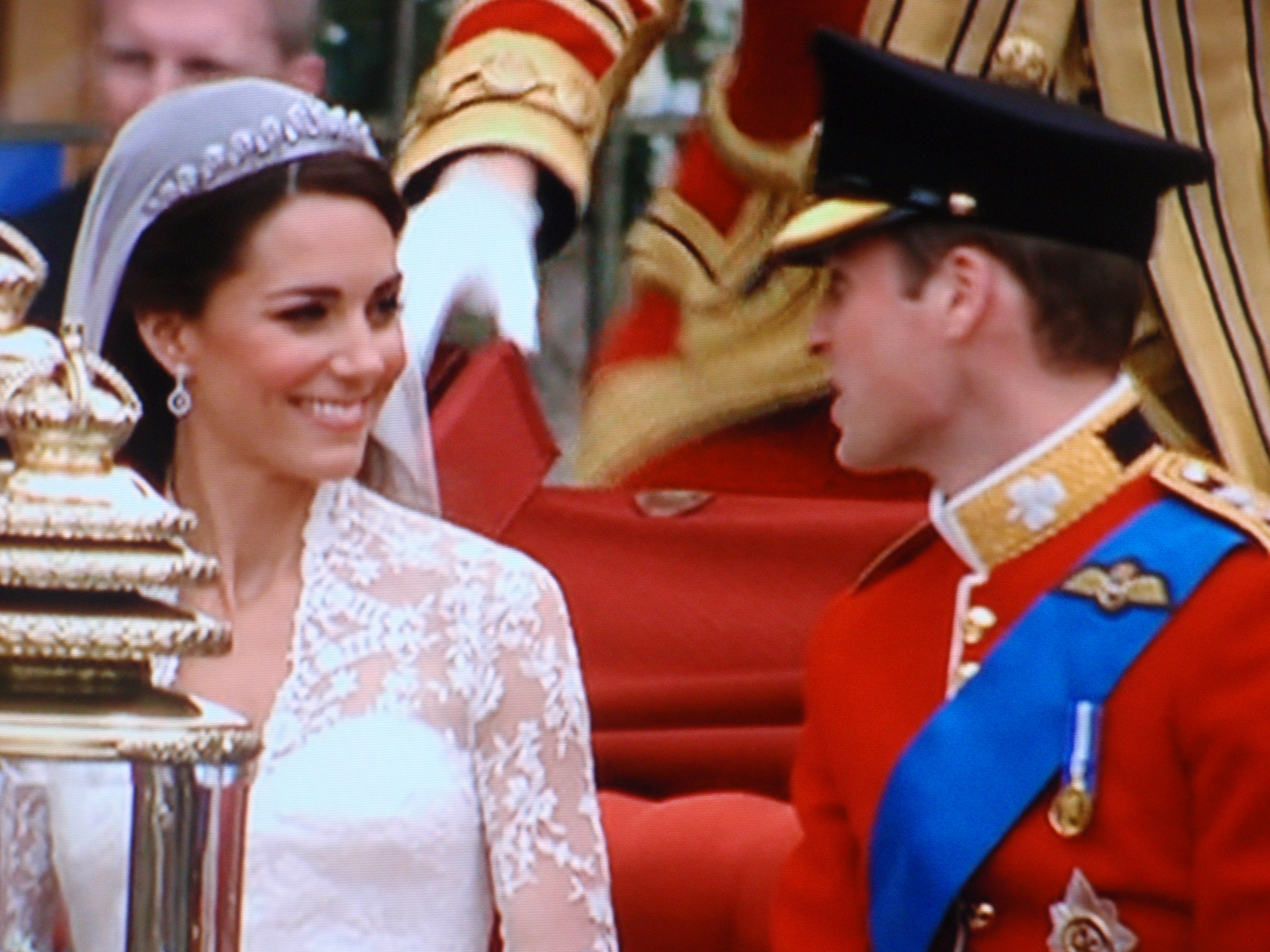
If actions display priorities, then the choice of the first official event attended by the Duke and Duchess of Cambridge says a lot.
William and Kate attended a star-studded charity dinner for Ark – Absolute Return for Kids as their first official engagement since their wedding.
While what the duchess wore captured the usual attention (“a shimmering nude gown by Jenny Packham”) it was the sentiment that took them to the Ark Gala that captured mine.
The duke announced a joint venture between Ark and the Foundation of Prince William and Prince Harry.
Prince William said he, his wife and brother wanted to use philanthropy as a “catalyst for meaningful change”.
Ark sponsors academy schools in the UK and programmes for disadvantaged children around the world.
Acknowledging the privileged education and upbringing he enjoyed, the Duke of Cambridge said, “So many young people do not have these advantages and as a result can lack the confidence and knowledge to realise their full potential.”
This comment carries forward the theme of the sermon preached at the Royal couple’s wedding: “Be who God meant you to be and you will set the world on fire.”
On the day a frustrated father protested on the Sydney Harbour Bridge over access to his children, I finished a nearly nine month stint as a Community Services caseworker.
Although Mick Fox’s grievance centred on custody arrangements after divorce, Community Services, forever to be known as DoCS, was also a target of his outrage.
A former girlfriend said, ‘I was with him for a lot of the time when he was trying to get in contact with DOCS [the Department of Community Services] and the police, purely because his kids were in danger every day.’
However the police and even the Minister for Family and Community Services Pru Goward denied it was a case in which Community Services were involved.
Without commenting on this particular case, it is sometimes one of the less attractive strategies of battling partners in divorce and custody cases to ring the child protection Helpline to accuse the other party of harming the children.
For a child protection system already stretched to the limit, these calls are always investigated thoroughly but soak up the precious time of caseworkers.
And so the day began on that dramatic note and proceeded to by a relatively typical day for my final one as a caseworker. Read More »
‘The emotion of it was still strong. There was a bitterness in him that he continued to chew over as Digger did not. For Digger it had been one time of his life among others; a time, simply, that had laid hard responsibilities on him, but ones that were too deeply ingrained in his nature now for regret. He accepted them. He made no complaint.
‘For Vic the injustice that had been done to him was absolute, a thing he could not forgive. Some possibility had been killed in him then, and though he had found others and made what he could of them – that’s how he was; that was his nature, his character – that other possibility, the one that had been starved and beaten out of him, seemed especially precious.’ The Great World, David Malouf.
An old war veteran died today. Like all of them, Claude Stanley Choules no doubt had his own way of dealing with the grief of war.
‘He served in two wars but he hated war – he just saw it as a job,’ said his son Adrian. At 110 he had been the last remaining World War 1 combat veteran.
Incredible grief and loss is buried in the lives of many who have returned from war but also in many who have never been. Australian author David Malouf captures two of the dealings of pain, loss and grief. Does one or the other resonate with you?
Some of us integrate it and become something a little more, or perhaps a little less, than we might have been. Others are driven and cajoled by what might have been and never truly settle. Even achieving great other ‘possibilities’ does not assuage our sense of loss.
There is a Way that releases us so that now and not the past becomes the arena of living.
When we see people in the Middle East rejoicing in the streets over the death of Westerners in a terrorist attack, we feel outraged. We struggle to understand the world view that would cause one person to celebrate the needless death of another.
And while it may be a poor comparison, seeing Americans cheering in the streets over the death of Osama bin Laden doesn’t sit well with me either. While it could be argued that his demise is a justified casuality of war or a just result for a terrorist, surely it is still an overwhelmingly sad moment.
Sad that it continually comes to this in human history – someone must die for others to feel safer, freer, stronger.
15th century depiction of Cain and Abel
I don’t judge those that are cheering – so many were touched by the 9/11 attacks and many other tragic killings around the world, it is understandable that there would be a sense of relief and victory and yes, even celebration.
But in the cold light of day, people will soon realise that the world’s problems, America’s problems, have not gone away and the struggle that has gripped humanity since Cain and Abel goes on unabated.
President Obama said that people who love peace and human dignity would welcome bin Laden’s death. Maybe so.
But only One Man’s death has ever truly provided for peace and human dignity in a profound, eternal and ultimate way. And his undeserved death was for thieves, murderers and, yes, scandalously, even terrorists.
See how some of America’s Christians are responding:
Whatever interest there has been in the Royal Wedding to this point, it has almost been overshadowed by one small act of affection, the Royal Kiss.
As much as people have been caught up in the pageantry, celebrity and history of the Royal Wedding, humanity seems to crave even more the intimacy, reality and spontaneity of two people touching lips to show their love.
Prince Charles and Princess Diana were the first royal couple to kiss on the balcony of Buckingham Palace, and it is rumoured that Charles first paused to ask permission of the Queen, which was duly granted.
Now William and Catherine have given their own romantic demonstration, as if to anoint the vows that went before, accompanied by the oohs and aahs of a couple of billion television viewers.
Many television commentators, swept along by the great sense of good ‘will’ accompanying the wedding, have spoken of the couple as carrying with them the hopes of a new generation and a renewed era.
But a marriage is more than a wedding service and balcony kiss (or two), and hopefully William and Catherine have taken time to learn the lessons of the past and will find their way to live with wisdom, balance, faith and, as their prayer from the wedding mentioned, generosity.
A work colleague who I’ve only known a few months kindly invited us to share the Sydney’s New Year’s Eve fireworks from her harbourside location at Darling Point.
I calmly mentioned would she mind if seven of us showed up and in the great Australian tradition of hospitality, she warmly welcomed a few Halletts and relatives from Canberra.
During the wait between the 9pm and midnight fireworks, I was reminded of the new world of technology in which we live when my brother-in-law rang from his header on his farm near West Wyalong.
As the GPS system guided his large grain header through the heavy but rain-affected crop, I stood a hairbreadth from Sydney harbour and we chatted about our shared lives.
Grateful to hear that it was dry enough (for now) to harvest without getting blog, I wished him a happy new year in time to turn around and see my nephew playing with another boy on his iPad, seated on the lawn, surrounded by the panorama of Sydney.
Darling Point… originally named Mrs darling Point after Governor Darling’s wife. And previously known to the Aboriginal people as Yarranabbe, the name of the street we were in…
Sitting in a Christmas Eve service I was enjoying a short film from the kids of St Paul’s in New Zealand, when a phrase spoken by one of the children went off in my head like a gun.
‘Jesus had two daddies, God and Joseph…’
While people sometimes stumble over the paternal origins of Jesus, the children who made this Christmas film had no trouble accepting that there were, in some sense, two fathers in Jesus’ life.
And why would the kids of today have trouble with this concept when so many of them live with this reality, and even more complex ones.
In the work in which I’m currently involved, I spend much of my time with children and young people coming to terms with a constellation of adults who represent mother and father figures to them.
It is particularly difficult at times for foster children, who find themselves in a loving foster home with carers they regard as their mummy and daddy, while at the same time having regular contact with other people who are, in many cases, equally loving parents.
It is one of the main challenges of child protection globally to know how to resolve this issue in a healthy and a whole way, for the benefit of the child. It rarely is easy and often encounters incredible difficulties.
Hundreds and thousands of foster children will be faced with this dilemma this Christmas season and how well they negotiate it will depend a lot on the selflessness and security of the adults involved.
Then there is that other broad category of children who have multiple parental relationships – those from families touched by divorce.
Perhaps for the first time it occurred to me, during the Christmas eve service, that Jesus had found yet another way to identify with the heartache of this world – represented by the complexity of having two dads.
I know it’s different, and I know having God for a dad is unique, but in the moment that child spoke these words, ‘Jesus had two daddies’ I knew many children would feel happy to hear that they were not alone in working this out.
For many years I have attended church and was aware of and in touch with global poverty, local disadvantage, the ravages of substance abuse and the struggle of mental illness, but I had scant knowledge of the hundreds and thousands of children balanced in the fulcrum of parental responsibility. Who has responsibility for them – mum and/or dad? Uncle and/or aunt? The government and its delegated foster carers? Or have they taken responsibility for themselves at far too tender ages?
Jesus had two dads who both took responsibility for aspects of childhood wellbeing. We live in a time when more and more children are finding their parents will not or cannot take responsibility for them. These are rarely clear-cut or easy decisions.
Stepping into this breach are a range of government and non-government caseworkers, relative and foster carers trying to replicate the love and belonging of birth family, something that is remarkably hard to do. And yet many do it well – and deserve special recognition and thanks.
So if you are going to pray this Christmas, spare a line or two for kids with too many parents or too few; for parents who have lost their kids and can’t seem to work it out; for carers who are family and those who are not, who raise kids with love; and for government and non-government workers who try to put this stuff together, usually with not a thanks to be found. Happy Christmas. Jesus had two daddies too…
In John 2 Jesus attends a wedding in a Galilean town called Cana.
Like many people at wedding receptions, it seems he took a low profile, perhaps feeling like he was on the edge of the relationships at the heart of the wedding.
Besides, celebrations can be hard when a difficult reality is always on the edge of consciousness. Jesus somehow carried the emotional burden of his impending sacrifice through all he is recorded doing in the gospels. This is how I know he understands that many of us can standing smiling at a party or shaking a hand warmly and at the same time be holding off sadness or fear or grief or anger or doom. Apparently there is a freedom for miracles even in the midst of this paradox, judging by Jesus’ example in John 2.
When the wine run dries Jesus is called on to intervene and he uses what is at hand: servants, clay jars, water, his own sense of what is good and right, and perhaps just a little passion for the surprising.
John records that there were six jars of 20 to 30 gallons capacity. We each have a certain capacity, some days it’s 20, some days it’s 30. Either way Jesus’ command was to fill them and they were filled to the brim. He is less concerned with our actual capacity – which will vary from person to person, day-to-day, season to season – as to whether we will receive his command to be filled.
The result was breathtakingly good and everyone benefitted. If you are like me you may also appreciate some breathtaking good right now… ‘Fill us full Lord!’
And then there’s the secret art of servanthood. While everyone enjoyed the ‘best for last’ wine, John says only the servants knew where it came from. Being a servant will mean you are not usually the one at the head table tasting the wine, but it may mean you get to share in a miracle, a touch of heaven, a piece of grace, that you will treasure forever. This is the unspoken reward of serving and it is sometimes little appreciated. Never mind, there will always be those who are still and obedient enough to hear the words – ‘fill them up’ – and go into the world and do just that. Let’s be among them today – only be sure to serve ‘full’!
It’s snowing on Utterance, a WordPress nod to Christmas. But as we are in the southern hemisphere, and the weather is decidedly warm and damp, I think we can describe it as ‘slow rain’. If you don’t know what I’m talking about, it may be time to upgrade your computer…
Image via Wikipedia
And some trivia for a slow, wet Saturday afternoon… I wrote a story about Masterchef and the seven deadly sins on July 11 and since then it has recorded 2,109 world-wide hits. That’s a lot of people reading an article that ends with this comment:
The message – however much we have been sinned against, forgiveness can be greater. Obviously, we can turn that around and say that however many times we have sinned, God’s grace is sufficient to bring forgiveness – if we sincerely receive it.
The problem is that if we do not acknowledge the existence of sin – a widespread modern phenomenon – we will not access God’s forgiveness. In this case, if sin does exist , despite our disbelief, we remain unforgiven.
Most people visiting the article have used an internet search related to seven deadly sins or terms such as ‘gluttony’.
Another very popular post relates to Bear Grylls and his Christian faith – about 1,700 readers in five months. Grylls says this about his faith:
‘Christianity is not about religion – it’s about faith, about being held, about being forgiven. It’s about finding joy, finding home.’
In some parts of country Australia, such as western NSW, it has been at least five years since there has been a harvest of any note.
The land at its people have been oppressed by a stubborn failure of rain for up to a decade.
Ironically, the challenge this year has been too much rain with flooding meaning some farmers have missed out again.
Thankfully blue skys and a warming sun are prevailing for now, allowing harvesting to begin.
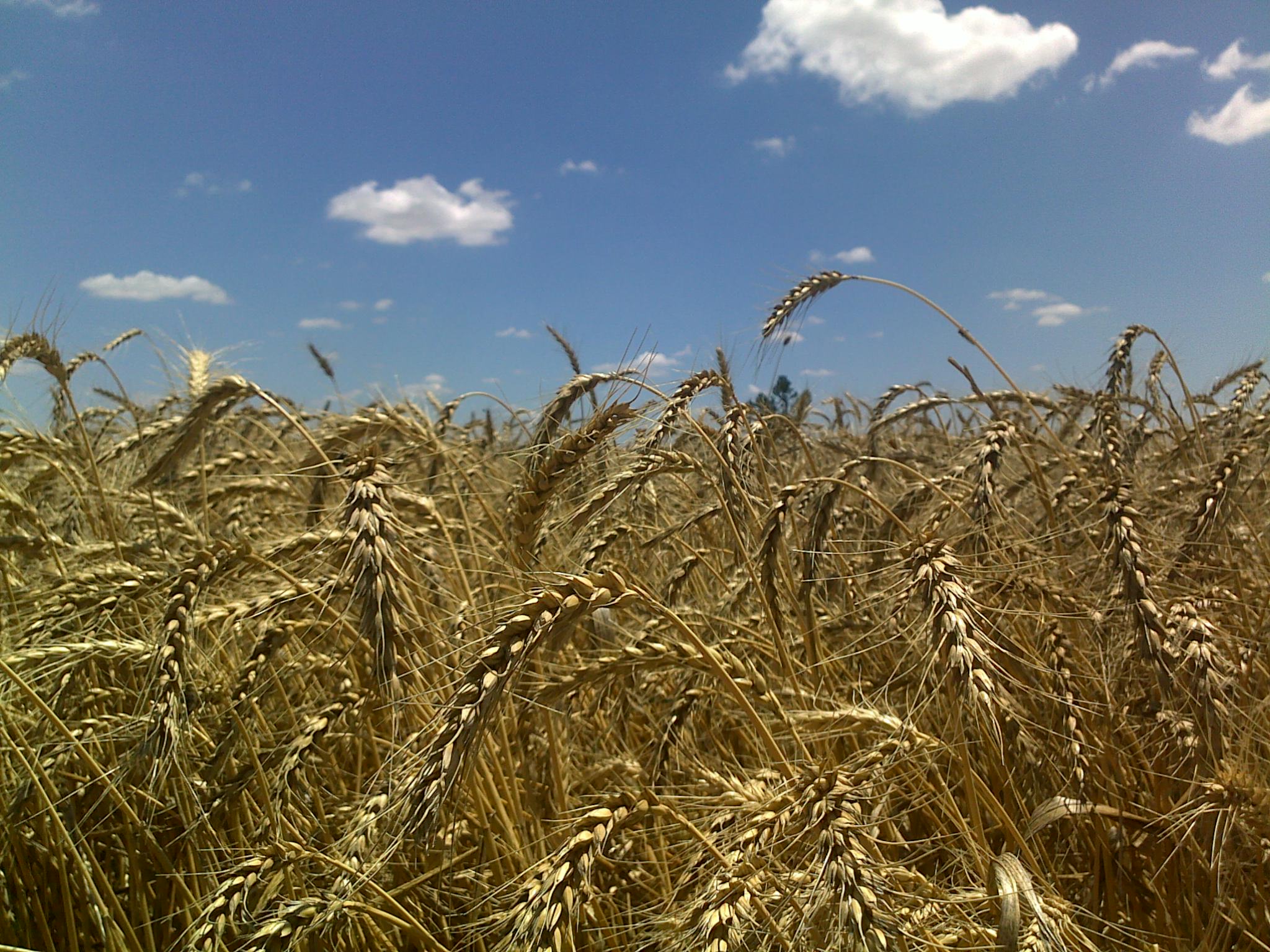
The west feels profoundly different, as if the pain of past years has been washed away by renewing rains or buried beneath a mountain of multiplying grains. The birds are more abundant and even tired old trees have dressed up in the latest green shoots of spring.
I am from the city but have been deeply moved in the presence of a paddock standing thick with wheat, the wind rustling the golden stalks like a happy, dancing wraith.
While there is much yet to do before farmers will feel their harvest is safely finished, this magnificent return to reaping what you sow is a massage to the heart.
There’s a rightness to it that challenges the cynical unnaturalness, or fakeness, of so much recent thinking.
Return to hope, return to the basics of love and truth and growth and new life. Return to God, the author of it all.
Murmur of walking feet
Warm, very warm ‘He’s a great vocalist, but he’s just not pulling his weight’
Two Asian girls standing in a sea of walkers ‘And she’s consulting him‘
Two nuns, one speaking, Canadian, flourish of the arm ‘It’s good karma’ Young, white, with long dark hair, and not a clue about Hinduism
Cool near the end of the tunnel
Murmur of walking feet








 utterance