A far-flung Catholic School became the centre of inner city ire this week when news broke that a child had been denied enrolment because her parents are a same-sex couple.
Within minutes of the story being aired by the ABC, Greens schools spokesman John Kaye was on the airwaves lambasting non-government schools in general because they weren’t subject to anti-discrimination laws. He demanded that they be made to abide by these regulations if they wanted to continue receiving 85 per cent government funding.
Leaving aside the right or wrongs of the actions of the Sacred Heart School, Broken Hill, and indeed the veracity of the claims being made against it, let’s consider for a moment who is righteous enough to cast stones in this situation.
If the well-being of the child is the real issue, as the various detractors most self-righteously proclaim, then the action of the parents in taking the matter directly to the media is highly questionable. There would have been several other options, if their concerns were in fact sincere, such as appealing to the appropriate Bishop who would have quickly offered the child a place, judging by his reaction since the story broke.
Anyone who knows small towns realises that everyone in Broken Hill now knows exactly which family is at the centre of this row, surely not an ideal situation.
Then there is the hypocrisy of John Kaye who immediately politicised the case and uses it as an excuse to push the Green agenda which is to force faith-based schools to relinquish their deeply held, ancient beliefs that are at the centre of their life and community. What he would really like is to see private schools removed altogether, or at very least, all funding for them removed.Read More »
US media commentary has been prolific for some time regarding Denver Bronco quarterback Tim Tebow and now is nudging its way into Australian newspaper columns.
Fairfax papers’ such as The Age in Melbourne today reported how ‘America fawns over God’s anointed NFL star’ but even well-known Australian religious cynicism put barely a dent in the 24-year-old Christian grid-iron player’s almost miraculous aura.
The article describes how Tebow’s remarkable run of last quarter comeback wins even over more fancied rivals has captured the imagination of football and faith fans alike. Says The Age:
“Even Americans who have never tuned in for a Sunday afternoon game have come to admire Tebow’s humble demeanour and his religious devotion, which they say makes him an ideal role model for youngsters.
Some have been disarmed by his matinee idol looks and ripped physique. Others see him as a potent anti-abortion symbol, after hearing the now familiar story of how his mother had refused, against her doctors’ advice, to terminate her pregnancy while carrying “Timmy.” She now is one of America’s most vocal pro-life advocates.
But real superstardom for Tebow has come because of his exploits on the gridiron.”
And then there is Tebow’s typical after-touchdown celebration which sees him drop to one knee, eyes closed and head bowed in prayerful thanks. The pose has been dubbed ‘tebowing’ and while hearing American stars give thanks to God is commonplace (even those whose lifestyles belies any hint of an interest in God) Tebow’s is undoubtedly sincere and is catching on fast.Read More »
Through a dirty window, a sky cleansed of city smog by days of rain produced an inner city sunrise that took me emotionally to many beachside moments where I have enjoyed the same experience. Reminded me that peace, rest and beauty are as much an inner state as they outer phenomena.
Christmas as we know it has been culturally crafted over thousands of years around a base narrative concerning a family in Roman-occupied Israel.
Each December various scientists, atheists and pot-shotters are trotted out with their latest theories debunking Christmas and erstwhile Christian intellectuals and apologists bravely rally to defend the seasonal ground. Others argue over various cultural accoutrements to Christmas such as dates and customs and commercialistation. They act as if the average person is not intelligent enough to distinguish between later attempts to mark something significant and the significant thing itself.
Certainly the habitual attacks on the historical origins of Christmas or Easter or any Christian belief along with the confusing but largely irrelevant criticisms of the cultural artefacts that accompany those traditions, have a gradual, destabilising effect on the faith of the wavering or nominal who are probably the majority of believers in our nation. Around the globe however the effect is infinitesimal and Christian faith continues to thrive and multiply in amazing diversity with scant disregard for broadsheet column centimetres.
That is because at the heart of it, the Christmas story – to quote myself – ‘a base narrative concerning a family in Roman-occupied Israel’ is so shockingly familiar to our own human experience it reaches us where the debunkers and apologists never could, in the messy, bloody birth waters of our soul.
Here are just a few examples, in no particular order:Read More »
Authors will be able to publish their own books in print and ebook format with possible release through Dymocks’ stores thanks to the bookseller’s own online self-publishing tool to be launched tomorrow, December 7.
Known as D Publishing, it will be similar to Amazon’s Kindle Direct or Blurb with the added bonus of possible sail through Dymocks’ 90 strong retail bookstore network, 70 of which are located in Australia.
Announced earlier in the year and originally expected to be rolled out as early as October, D Publishing “aims to support all Australians with stories to tell”.
In announcing the launch, Dymocks Chief Executive Officer, Don Grover said the new publishing service, allowing Australian writers and authors to create and publish books, was a logical extension for the business.
“We believe that D Publishing has the potential to significantly support and grow the book industry in Australia by providing more opportunities for Australian authors to create, publish, and sell their books,” said Mr Grover.
“Unlike the traditional publishing model this service is driven by the author. If you are thinking about publishing your first, or one of many books, you should think of D Publishing.
“D Publishing will be an opportunity for all budding Australian authors to see their works in published form and available for purchase online, while a selection of titles may also be available in Dymocks stores across Australia.”
The launch will take place in Dymocks’ George St, Sydney store tomorrow and is expected to be available online to registered Dymocks Booklovers.
Having self-published two books through US-based Blurb, I will be interested to compare quality, costs, turn-around time and author’s rights. The process by which Dymocks selects titles for sale through its bricks and mortar stores or online will be another point of interest.
“Time’s a goon” says ageing rocker Bosco in Pulitzer prize-winning A Visit from the Goon Squad by Jennifer Egan and I gain some insight into the title and I realise that this book and A Sense of an Ending that won the Booker prize this year both tell stories about the passing of time and of lives and how the choices of, especially youth, but of other times, reverberate and get distorted and misremembered but are unerringly true in their effects. And why is it that there are never any people in these books who were innocent and naive and married for love and lived what they believed and remained faithful always and raised children and worked through tough times and never gave up believing or loving but sometimes, for a moment, they feel they may have missed something even though the really have it all but feel that confusion because the world they have to live in is so mistaken. And books that win prizes never, ever tell their story. Read More »
Since the recent Utterance post highlighting Channel 7’s promotion of 2012 series Good Christian Bitches during the grand final of X Factor, a backlash has developed, mainly aimed at the name, with a petition on Change.org.
The petition was begun by Carol McFarland and at time of writing had been signed by 2,445 supporters. Carol’s reasons for opposing the show include, “It is inappropriate and rude to name this show with such explicit language that is uncalled for. We are meant to respect all religions, no matter what the belief system is, but this shows utter disrespect to the Christian Religion and also to Women and is highly offensive.”
When pilots of the show were first being considered by ABC in the US, Good Christian Bitches was the working title, in keeping with Kim Gatlin’s novel, but with pressure from the American Family Association and other organisations, the names was changed to Good Christian Belles and eventually to just GBC.
A key argument was that it was demeaning to Christians, to women and would not be used in the context of another religion, for example, Good Muslim Bitches. These arguments are certainly fuelling the fire in Australia as well. So far Channel 7 has shown no sign of changing the title and, more than likely, is revelling in the publicity.Read More »
Almost quietly, WordPress announced this week that it would allow bloggers to have advertising on their WordPress hosted blogs. This news has been keenly anticipated by many bloggers and yet the announcement was brief and without fanfare, perhaps to avoid an immediate avalanche of uptake. WordPress has, rightly, closely guarded the integrity and aesthetic of its platform and perhaps predictably, the […]
December 1 tomorrow and a traditional date for many to put up their Christmas tree while listening to carols and eating cherries – in the land down under at least.
But increasingly it is also the day when bathrooms across the nation are littered with much-loved or much-maligned facial hair as it is removed to mark the end of Movember.
The moustaches, including my own, are somewhere in the range of impromptu, uncalled for, optimistic, unrealistic, threatening, questionably bushy, occasionally beautiful and down-right awful but regardless, most of them will go.
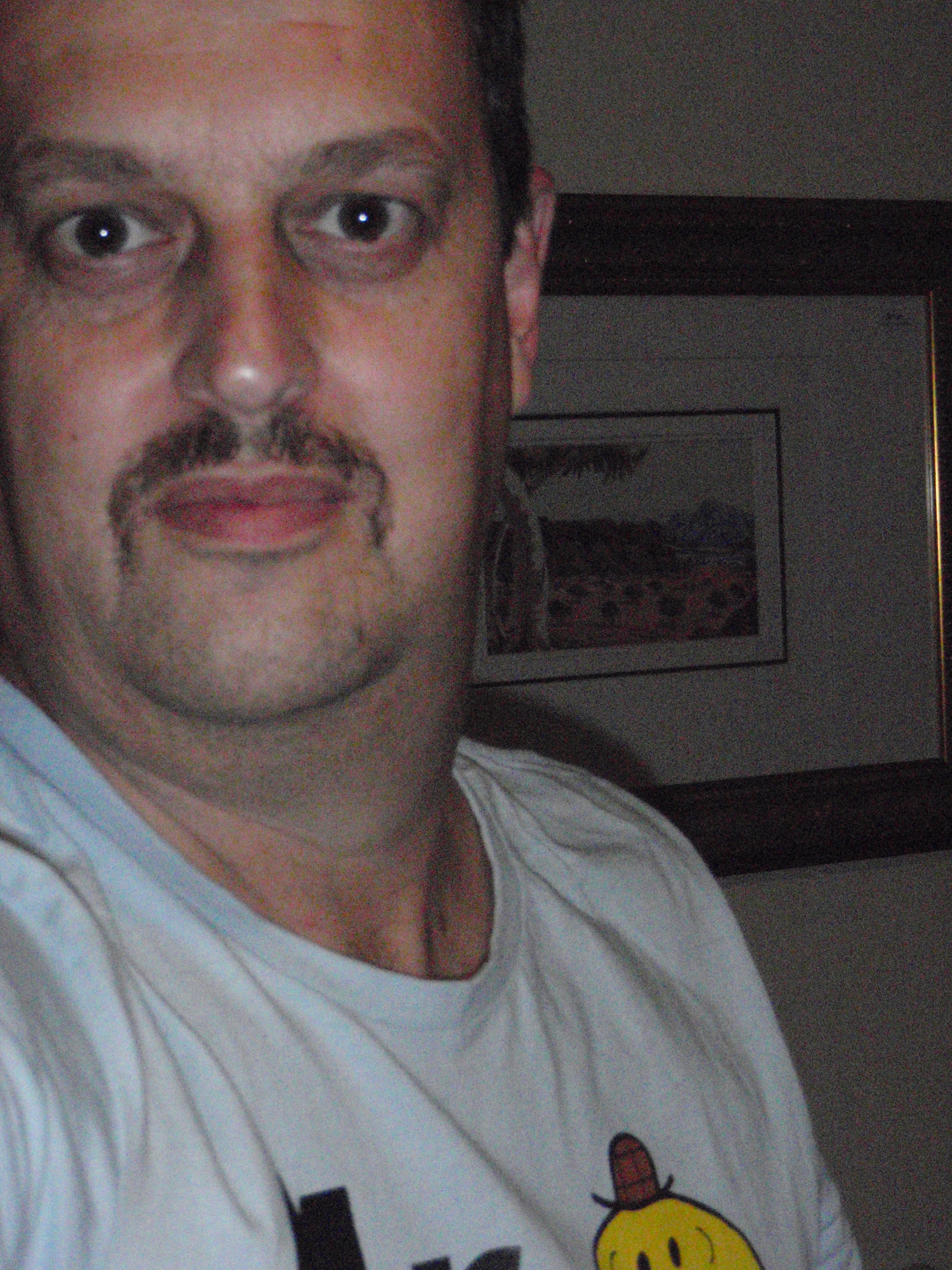
To give the many readers of Utterance (he says hopefully) an opportunity to give to the worthy cause of men’s health – prostate cancer, depression – I’m posting this final-hours photo of my Movember mo (with Oscar N in the background) and whilst wearing my Mr Mo shirt.Read More »
Reece Mastin has won Australian X-Factor and as a 16-year-old with enormous talent and the world of fame and fortune falling at his feet, I can’t think of a better person to have in his life than Guy Sebastian. Let’s hope Guy remains a mentor and influence not only because of his musical ability but […]
We wonder if Sydney’s inner west resident flag-marcher will be out and about today after Australia’s great win in the second test in South Africa. He was first spotted on the eve of one of Australia’s Rugby World Cup games, spreading national fervour around the intersection of Crystal St and Parrmatta Rd. When photographed, he […]
Sydney’s Jacarandas are giving a mauving display this spring as are the different varieties of flame trees. These two took a moment for a fond embrace in Glebe this week. Purple, the colour of divinity, wrapped around a heart of fire…
The sky over Sydney was like a dirty brush dragged over steel with a sullen sun and sudden (suspicious) moon and the hint of disaster carried on strengthening winds and sirens. A sky from The Road or some grim otherness but in the long run, not much more than looking west at peak hour…
Remembrance Day last week was highlighted by a preponderance of 11s – 11/11/11 at 11am – and reminds us that the events of time and space are not only measured by dates and location but by our less exacting recollections.
Memory and identity are in many ways at the heart of Julian Barne’s 2011 Booker Prize winning novel, The Sense of an Ending, which includes character Adrian quoting, ‘History is that certainty produced at the point where the imperfections of memory meet the inadequacy of documentation.’
If that is true, even in part, then all the more reason to have rituals of remembrance so that some things are not lost. Many of the world’s most memorised sayings or occurrences, such as those of the Christian faith, were passed down through oral traditions that perfected remembrance in a way we rarely do today.
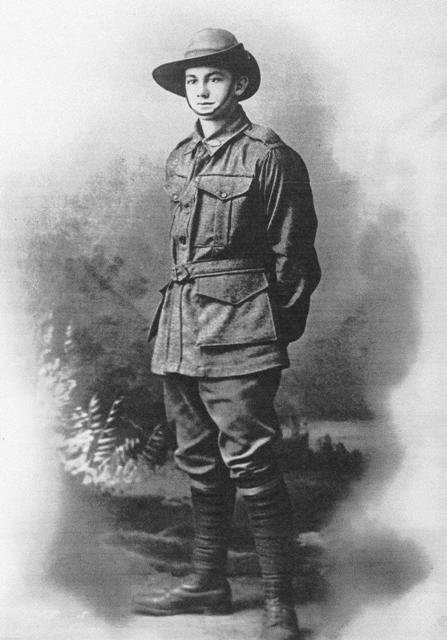
Roy Frederick Hallett
One such ritual is Remembrance Day which recalls for us Armistice Day, November 11, 1918 when hostilities ceased on the western front, virtually bringing to and end The Great War. It came too late for my great-uncle Roy who was killed in action on April 4, 1918 at Villers Bretonneax. He was one of 60,000 Australians who died in WWI and one of 11,000 or more whose bodies were never recovered.
The day before Remembrance Day I visited my sister’s grave because even though 17 years have passed since she was killed, we still remember and are still affected by her loss. We have a body, but no explanation as to who killed her and why, and so our remembrance is unsettled to this day.
It made me realise that as a nation, we must have been powerfully affected by 60,000 families all caught in a remembrance of loved ones lost. Even those who had graves to attend and accounts to read, would still have found the deaths of their loved ones hard to reconcile. Maybe our very identity as a people shifted through this mass remembering of those who would not return.
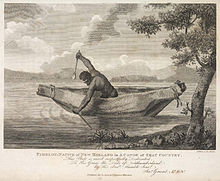
The only known image of Pemulwuy, one of the first Aboriginal leaders to resist white settlement.
And so we remember, through to World War 2 and it’s 40,000 slain Australians and onwards to today, including three more Diggers dying in Afghanistan. And while the casualties of war-time are just a part of the never-ceasing tide of life and death and birth and ageing that we are all part of, it is the sheer enormity of loss of life that these wars brought that stir us to find ways to remember, to acknowledge, to incorporate a sense of who we are through what has occurred.
But I fear that our remembering in this sphere is too often marked by what is forgotten or ignored as by what is recalled. The only number that comes close to the casualties of the two world wars, was that of Aboriginal deaths during frontier conflict across Australia.
While estimates by some writers of up to 100,000 Aboriginal deaths due to conflict with settlers is regarded as too high, many historians agree on a figure of about 20,000 Aboriginal people killed during a relatively short period as British colonisation of this land occurred. Perhaps 1-2000 white people were killed in these same conflicts which were, on more than on occasion, referred to at the time as the Black War or similar.
A mature nation, I believe, would realise that if white remembrance of the losses of war are vital to our sense of identity, healing and balance, then so too, or even more so, that of Aboriginal people. We cannot go back and undo these horrific losses for the first Australians, any more than I can go back and undo the death of great-uncle Roy. We can’t set aside the tide of history that produced colonial powers sweeping the globe any more than we can for the not dissimilar causes of World War 1 and 2.
But we can acknowledge that it happened – that many thousands of Aboriginal people died in attempts to defend their homes and their families and many more were killed in acts of revenge, extermination and ethnic cleansing so that white people would feel safe. We can acknowledge that this was and is brutally hurtful to those left behind and those that followed, and that it had far-reaching consequences then and now.
Are we ready as a modern Australian society to include in Remembrance Day or Anzac Day or Australia Day the idea that there is another great conflict at the heart of Australian identity and it is the one between Aboriginal and European?
It doesn’t mean that conflict need remain. Australia has rebuilt excellent relationships with many previous enemies – not by forgetting, but by remembering and at the same time, choosing to move forward. As to whether, when and how Aboriginal people may want to do this is another matter.
I fear our (white Australian) refusal to acknowledge this war in our past makes it harder for all of us, black and white, to enter into a peace that is authentic, just and durable. We can ignore it, but an unsettled loss rarely goes away on its own. That’s why we stop to remember year by year, so that in time the remembering hurts less and we are able to reflect and learn from our past.
Melissa,
I remember clearly standing here in the torrential rain, as we lowered your body into the ground to be buried and baptised at the same time.
The bottomless ache and overwhelming senselessness were disregarded by a deluge somehow fitting for an ill-begotten time.
We still remember, we still seek justice and I still fight murderers in my sleep. One day they will be vanquished. Until then…
Rest in His peace
If something strange happens to Utterance in the next few days, it has been probably been hacked. If it can happen to a French magazine, a Mexican drug cartel and Iranian nuclear facilities, it can happen to anyone.
With so much of life, business, industry and finance heavily reliant on computer and digital processes, it make sense that groups of hackers would begin to use their skills for a cause, not just to create havoc. Some have government backing while others are loose networks of computer geniuses but either way, they are emerging as powerful new players in the world’s political, religious, criminal and even national conflicts. Consider the following three examples.Read More »
Monty Python‘s fish slapping skit (below) was described by John Cleese, speaking on Seven’s Sunday Night program, as the silliest skit the comedy group ever did.
But when it came to the funniest joke, he offered this, towards the end of the interview:
‘How do you make God laugh? You tell him your plans…’
He was commenting about whether he would be married for a fourth time. In context, the joke suggests that we know so little about what will actually happen in our lives that to tell God what we are planning is hilarious.
The cultures of Aboriginal Australia have not been well respected or understood by those of us who have arrived in this great land more recently. So many opportunities to learn, understand and work together were missed, and continue to be.
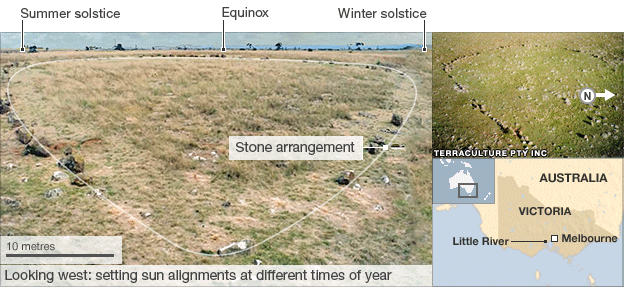
Little by little this is changing, in part to the gradual emergence of research and discovery that is filling in some of the many gaps. One example is research into a standing-stone arrangement in Victoria that may even date Stonehenge. The BBC report begins:
“An egg-shaped ring of standing stones in Australia could prove to be older than Britain’s Stonehenge – and it may show that ancient Aboriginal cultures had a deep understanding of the movements of the stars.
Fifty metres wide and containing more than 100 basalt boulders, the site of Wurdi Youang in Victoria was noted by European settlers two centuries ago, and charted by archaeologists in 1977, but only now is its purpose being rediscovered.
It is thought the site was built by the Wadda Wurrung people – the traditional inhabitants of the area. All understanding of the rocks’ significance was lost, however, when traditional language and practices were banned at the beginning of the 20th Century.
Now a team of archaeologists, astronomers and Aboriginal advisers is reclaiming that knowledge.”
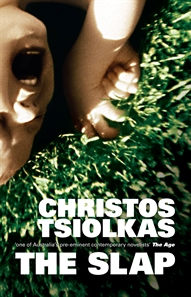
The television adaptation of Christos Tsiolkas’ 2008 novel The Slap is about to screen on ABC 1 and while it is a best-selling book in Australia and beyond, many of the television viewers will be encountering the story for the first time.
The Slap is an explicit novel – explicit in its treatment of nearly every bodily function and relationship dysfunction you can think of, or prefer not to think of. Oh, and did I mention the abundant use of legal and illicit drugs?
The television adaptation apparently holds little back and if that is the case, many will find reason why they can’t watch it, which is understandable, but a pity that some of the extremes of description were not moderated originally by the author. The story would not have suffered…
But that’s not his style and if you’re not sure if it’s your’s, check out a review of the book I wrote some time ago – it might give you some more insight, or a little more to offer around the water cooler tomorrow.
 A far-flung Catholic School became the centre of inner city ire this week when news broke that a child had been denied enrolment because her parents are a same-sex couple.












 utterance